The 250 build, nearing the end.

A slight diversion today as finishing the story of the 250 build is way overdue. So some words and pictures of painted bits, metal bits and a nice piece of leather.


With three coats of base black applied, a series of white stripes were then masked and added. Everything was left for a couple of days to harden up before a very fine rub over with extra fine paper prior to the lacquer going on. For reasons of cost more than anything I’d elected to use rattle can lacquer rather than 2-pack on all parts apart from the fuel tank, which would be treated to a good couple of coats of petrol resistant lacquer, again from a rattle can. In retrospect I wish I’d gone the 2-pack route but it made the whole paint phase way too expensive, the petrol proof stuff works well but has yellowed in places and was quite tricky to apply evenly. With the lacquer all hardened it was time for a good polish and I can’t recommend Autoglym Super Resin Polish enough. Fantastic stuff and everything was just so shiny shiny.

Two important pieces of metalwork remained to be fabricated as all the painted parts made their way onto the bike for the final assembly. I knew the area at the back of the seat needed tidying but hadn’t been able to do much about it without the seat so it was stroke of luck that the seat arrived back just in time from being recovered. The first task was to make a piece to shut off the open area between the new mudguard and the seat mounting assembly. this then wrapped over the seat mount and formed an infill sitting below the rear of the seat base moulding.As before I worked it all out with thin card first which meant I could create a pretty accurate template for marking and cutting the sheet steel which was cut flat and then bent up in the bench vice.

For ages I’d been wondering how to finish off the rear of the seat. Knowing that there would have to be some kind of cover plate didn’t seem enough, there needed to be something else in there to give a more finished look. The answer came to me out cycling one day when I spotted and old bicycle with a little pouch hung from the back of the saddle. I ventured onto the internet to see what I could find for motorcycles. As it turned out, not too much unless I wanted something that looked like it had fallen off the back of John Wayne’s horse, and tassels are definitely not my thing. Taking the bicycle route proved more fruitful and in a fit of extravagance I splashed out on this lovely little number from Brooks the saddle makers. I quickly made up an angle bracket to fix the panel to, mounted to the seat base, and again using some card drew around the profile of the seat and transferred it to another template for cutting. A couple of holes and two slots later I had a neat little cover panel that the pouch straps attached to directly.


With these two new parts painted black final assembly could continue apace, my deadline for borrowing the workshop was looming.



A return to the bike build.


Minimal fuel tank!

In the last installment of the bike build, which was let’s face it, too long ago and must be wrapped up soon, the exhaust was coming together. In order for me to be able to hear the results as the pipe came together a small tupperware container got a makeshift outlet fitted into its base and was then mounted to the main frame spar with a cable tie. With a bit of fuel onboard the engine could be started and run without the fuel tank in place and the exhaust listened to. The tank meanwhile was being prepped for painting.

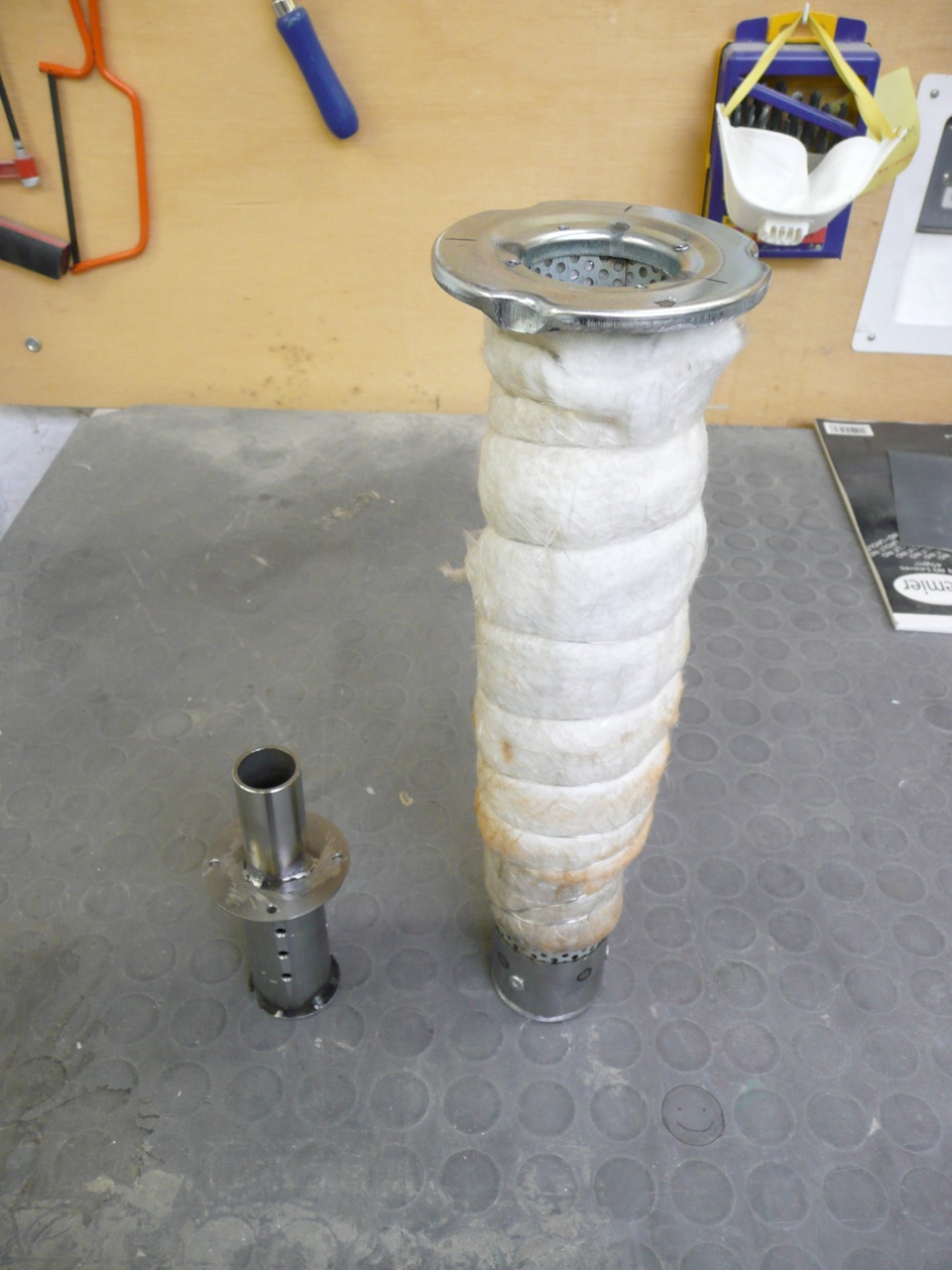
The “silencer” that had been ordered came with an internal baffle already, if that’s what you could call it. You see these pipes everywhere on custom modified bikes so it will come as no surprise to anyone who’s ever had one that internally they are rudimentary to say the least. There was a piece of glass fibre packing inside the pipe but this was as good as useless. It would have disintegrated if you’d held it behind you and broken wind, frankly. So, first job was to get some proper packing material and firmly wrap the baffle so at least some of the noise could be absorbed. It was still too loud.

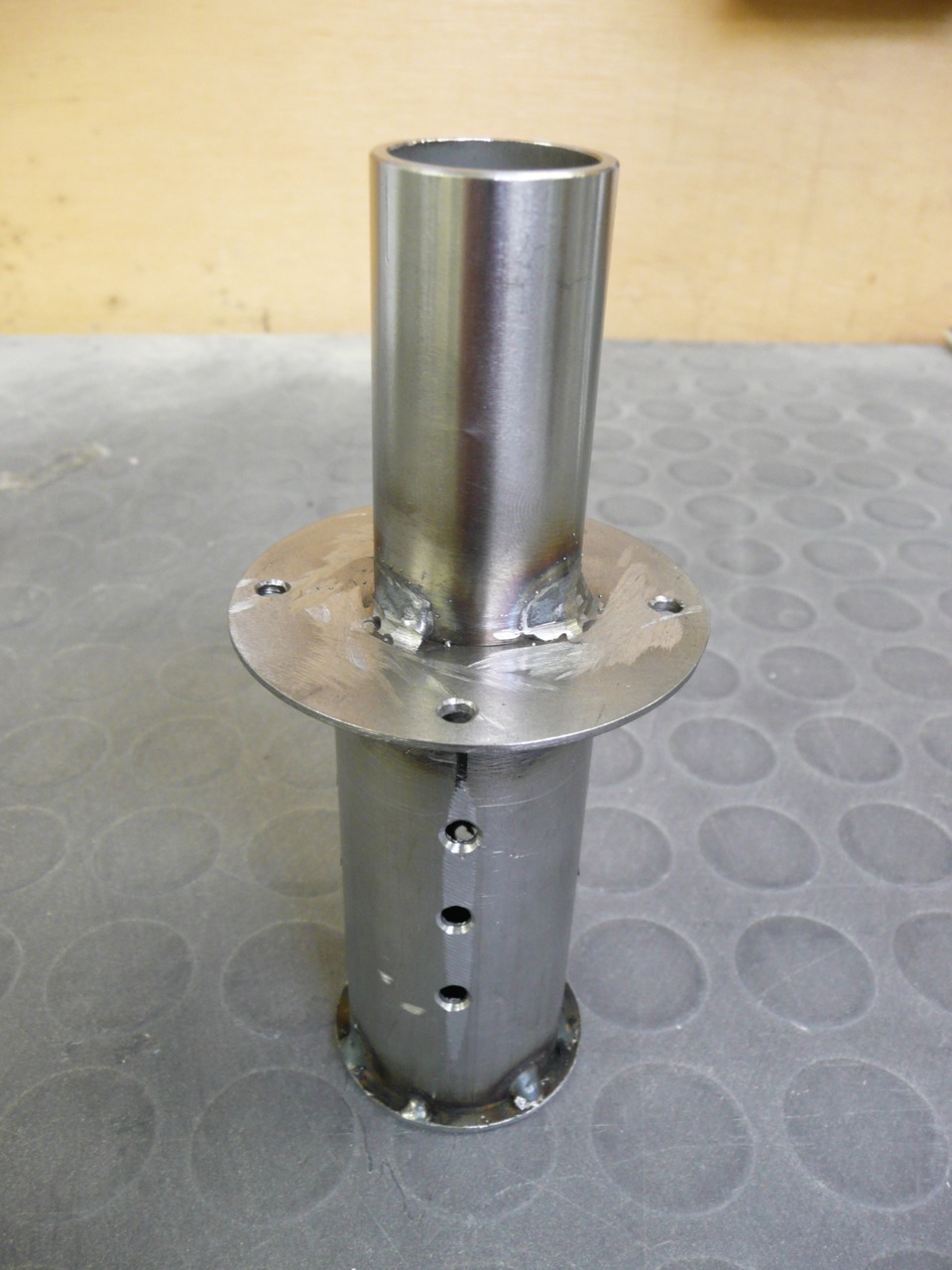
After a quick discussion about exhausts with the guys who’s workshop I was borrowing it was decided that the best thing to do was make a smaller secondary baffle that would fit into the end of the main pipe. Reckoning that the area of the holes in the internal cylinder should match that of the outlet it was time to have a go with the MIG welder. Not having used one much before, a quick session on the net provided some basic guidance to supplement the rather sketchy instructions contained in the user manual.

So a few hours later we had a finished baffle piece that fitted into the end of the main one that could be secured with three self tapping screws. Easy to remove and modify if need be and pretty much hidden behind the reverse cone end cap of the silencer. A couple of coats of aerosol heat resistant paint and the job was a good ‘un. This made a real difference to the sound and would be easy to remove if greater fruitiness from the pipe was wanted.This was the last fabrication job to do before the final build. What was up next was the biggest job of all, painting the bodywork.


Before moving on to that episode here are a couple of thoughts about MIG welding. Never having done any before, the thought of using the welder was a little daunting. Welding in all its forms has always come across as a bit of a black art, a deeply skillful craft practiced by wizards of metalwork with years and years of experience. This is all true but, it is also not as scary as it would seem. They say that every journey starts with the first step and so it is with MIG welding. Taking the plunge and having a go can lead you, with patience and concentration, to a thoroughly satisfying learning experience and hopefully a new found skill, and a finished part that you can be proud of.


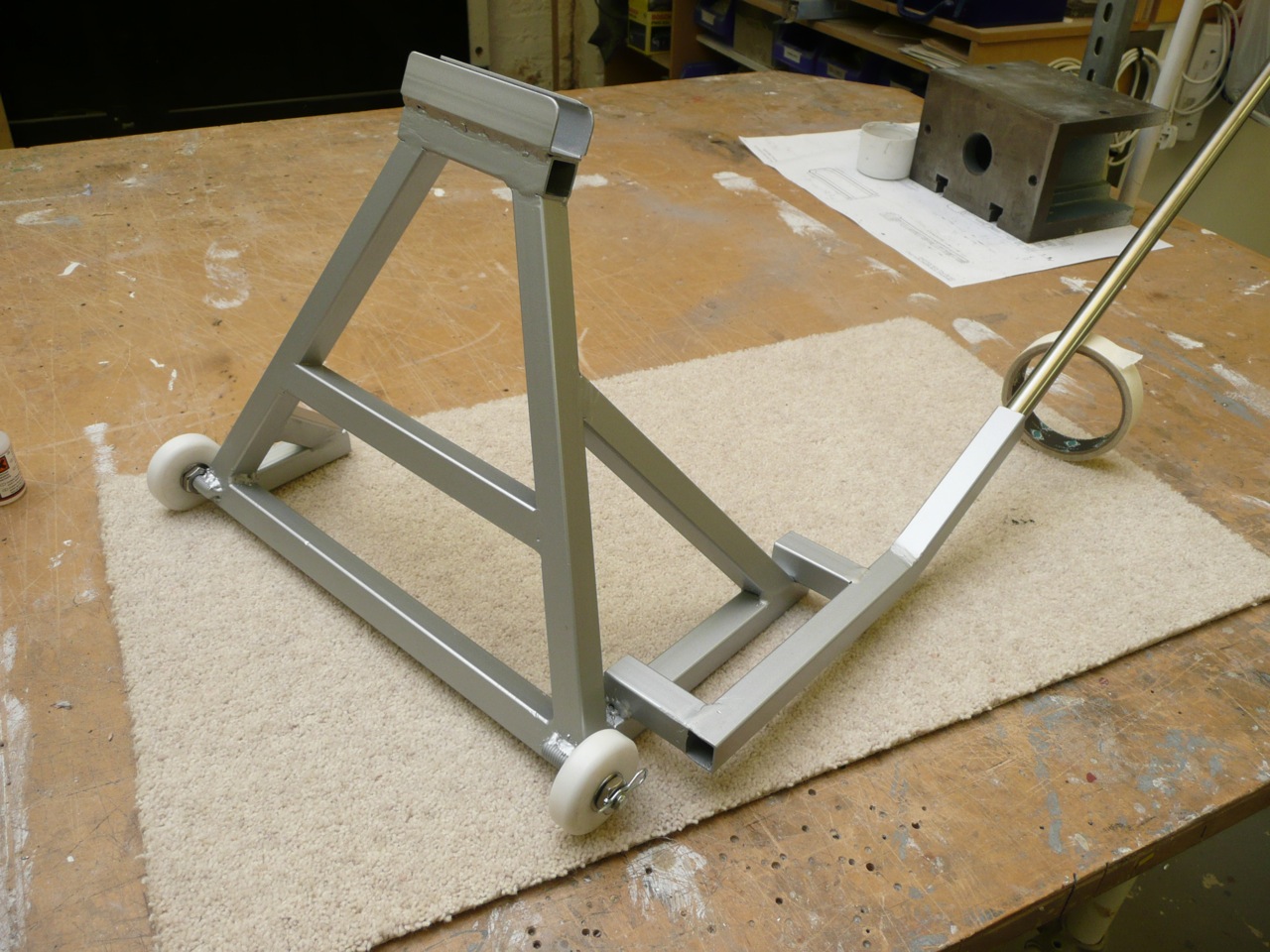
My own introduction to this skill took me from making a simple baffle on the first day to knocking up a small paddock stand for the bike, to use during routine maintenance as I’d seen fit to remove the centre stand as part of the weight loss program. All within a week.


As mentioned before the manual that came with the welder was a little thin and searching the internet for tips and tricks threw up some really useful information and some tips which I never would have considered in my inexperience. Here are a couple of links to the two most useful websites found. The first one was the best: Firstly Tips and tricks and the second one here. Sadly the need for welding anything in my everyday work is rare but it hasn’t stopped me from wanting to buy a welder and start making something.


Although my skills remain relatively basic I’m no longer reluctant to consider using a welder for smaller jobs. Welding bike frames is something best left to experts for now but, with a new skill in the back pocket, the options available when making more complex ancillary parts has now grown and that can only be a good thing for when the next project comes along.


The welder used was a small portable unit with up to 150W of power, switchable. It had a variable speed wire feed, a small remote gas bottle (Carbon Dioxide/Argon mix worked best) and nice hefty earthing clamp.


Cutting metal at last.

Graphic ideas appearing.

Whilst I had been deliberately distracting myself I had been fiddling around with a number of other things as well. Stripes of white electricians tape had appeared on the tank to see how it would look, various graphic devices had arrived on the side panels and I’d been playing around with ideas for a front fly screen.

So now I want to tell you how I made the rear fender. What I also want to do is try and make it a bit more interesting than just a plain old description, blow by blow as it were, of cutting bits of metal and bolting them together. It’s something that’s started to creep into my thoughts as I try and create more posts for the blog. As you well know from very early posts, or you may have read my “About” page, I spend a great deal of my professional time making models and prototypes for people. That process invariably involves employing lots of techniques and quick fixes to achieve particular results. So I’m always thinking about how I could pass on any of these things to my readers in the way of useful tips etc. The fabrication of the rear fender seems a great place to try and communicate some of these things. So here goes, though having said that I may very well get to the end of this bit and not passed on anything at all. The following piece will certainly contain some.

Plenty to play with.

As you will have gathered, my start point for this next phase of the build is a bike frame with the two rear seat support stays cut off and a moulded plastic inner fender which I’m retaining to help keep all the road crud out of the back of the bike as I’ll be using it in all weathers. I’ve also got my hands on a large rolled section of aluminium mudguard, sold by those wonderful folk at Burton Bike Bits. I’ve chosen a rounded section with a rolled edge, for neatness. It arrived as almost a full circle of material. The plan was to first figure out how to mount it securely, I didn’t want it flapping about as I bounced down London’s crappy roads, and then to decide on a length that would offer good protection and cut the piece to size with the end shaped how I wanted.

Mounting plate attached to cross member.

The first task was to secure the plastic inner guard, which only loosely clips to the frame and relies on the original mudguard for support. Conveniently nearby is a cross brace on the frame under the seat so I made a plate with a protruding finger of material out of 16 swg mild steel sheet that I could secure to the cross brace and to the plastic guard. I couldn’t weld at this time, and only now can do rudimentary stuff with a MIG welder, so I had to screw the plate in place. I always find putting threaded holes directly into thin walled tube a bit of a fudge and on this occasion used what I know as Pull-serts or Grip-n-serts. These are threaded inserts specially designed for creating blind threaded holes in sheet materials. Very handy things, available in most thread sizes and they give a great result where you don’t have enough material to provide a decent thread length in a tube wall, sheet thickness and even extrusion wall. Three of these at M5 size into the cross member worked a treat and provided a very sturdy mount for my plate. A happy coincidence was that the plate also formed a neat compartment under the seat for the electrical connections to the rear lamp cluster.

Foam block and tape doing their jobs.

So now I had the plastic guard secured and with a single central hole drilled, a place to mount the rear guard metal section enough to allow me to start to think about its length, angle and subsequent mounting points. I’d cut the big piece of rolled section down a bit to make it more manageable and found a handy lump of scrap modelling foam that I could sit on top of the tyre to support the piece while I decided on angle and length, helped, as you can see in the photo by a piece of duck tape on top.

Anyone familiar with a retracting tape measure knows that curved sections of sheet material are only rigid in one plane and waggle about like no ones business when you least want them to. The same applied to the rear fender section so the next challenge was to come up with a way of preventing that action occurring at the back of the bike. Time to get the sketch book out.

I’m not sure if Pull-serts live up to being a top tip but it’s a start.