Getting ready to paint.

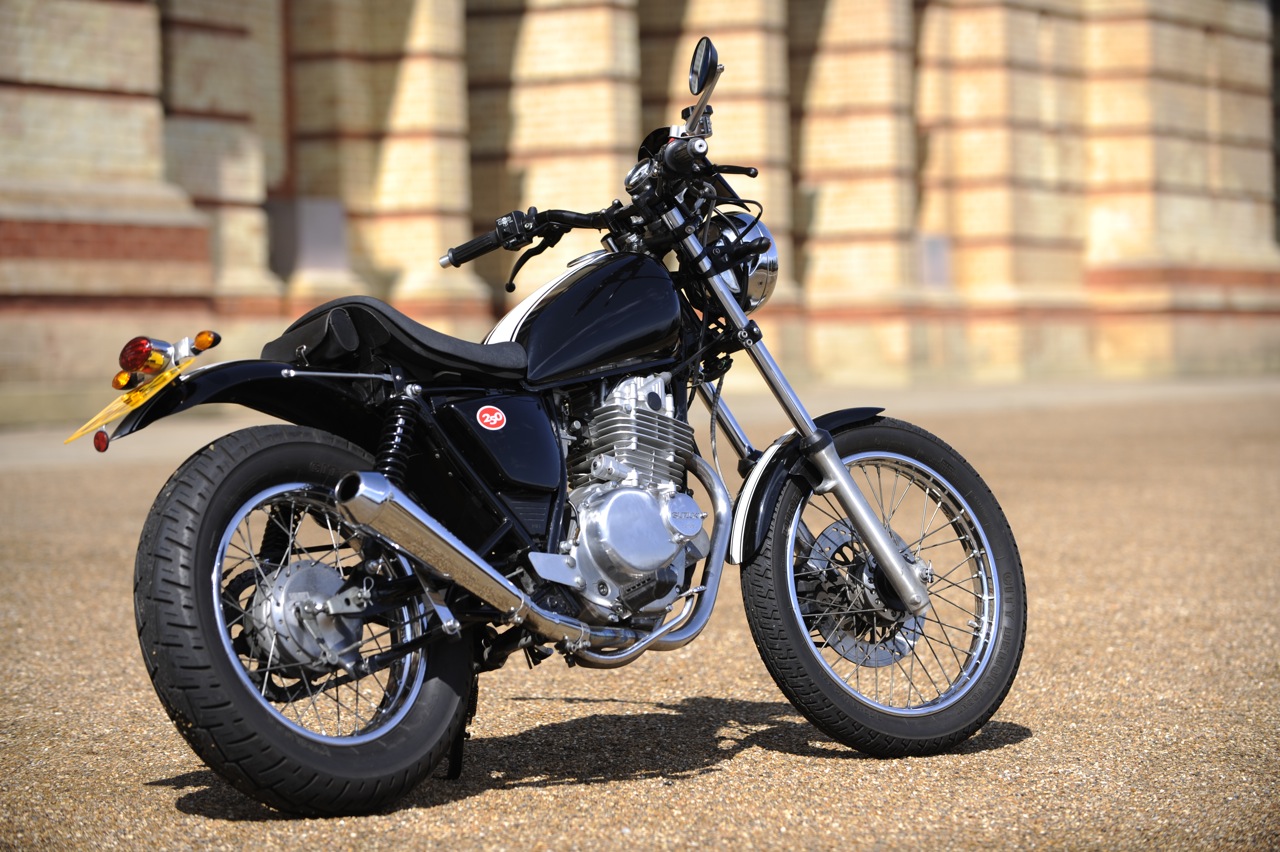
All the prep was worth it.

Before getting stuck in to the painting of the bike parts I thought it might be useful to share some of the things I’ve learned about spray painting. This is not a definitive list of top tips merely some things I’ve picked up over the years through being taught basic technique and learning from some ugly mistakes.

My memory is full of useful tips passed on to me and hard learned lessons about putting paint onto objects. The first is that paint and its application is nothing to be scared of and secondly, that the process rewards the patient. All manner of practical skill areas are full of old maxims and adages that seasoned practitioners swear by, and for good reason. One that applies to painting anything is the six P’s, and it goes like this: “preparation and patience prevent piss poor performance”. The first two P’s are the critical ones I think. Over the years, working in modelmaking, prototyping and design it has been an often painful experience to witness hours of painstaking work be reduced to scrap because of a lack of patience and prep in the paint phase. For some unknown reason people often behave as if paint were some magical substance that has the ability to apply itself and achieve the most perfect of finishes by its own volition. This is not so of course. Paint needs a lot of help to do what it’s meant to do properly and, give you a finish that is both beautiful and durable. Paint needs time so the more you can allocate to it the better. Planning out all of the various steps that you will need to go through is a good habit as it allows you to tackle things in batches rather than individually, piece by piece.

It’s also worth taking time to prepare the area you’ll be working in with as much attention to detail as the part you’re going to spray. Dust and other airborne particles are your enemy so minimising their presence is worth it too. Sprayguns, mixing pots, stirring sticks and turntables all have the capacity to ruin your finish so making sure they are clean and dust free helps too. Similarly, cover up surrounding areas with dust sheets as any overspray will cover everything in the vicinity with a fine layer of dust which you will only have to clean off later. Obviously if you have a dedicated spray booth this helps but giving it a good clean is never a bad thing. In fact if you can hang some dust sheets around your work area forming a kind of cubicle to spray in it’s worth doing, but make sure you’ve got a bit of air flow in there.

There are many different paint systems out there so it’s valuable to know your paints. Ask your local supplier, research on the internet or talk to an experienced hand but, always make sure that your primers, top coats and lacquers are compatible with each other and with the material your object is made of. Nothing disappoints more than a top coat that crazes over a different formulation primer or decals that gently dissolve as the first coat of lacquer goes on. If you’re in any doubt, ask. Finding and getting to know your local paint specialist is well worth the cost of any time invested. Experts love giving advice if you ask for it nicely anyway.

Whether you’re using rattle cans or a spray gun apparatus, the technique is essentially the same. Any differences are really in how much control you can excerpt over each method. A can comprises paint, gun and air supply, or propellant, in one convenient vessel. Using a gun requires a compressor and all manner of sundry bits and bobs to effect the same result. But the can doesn’t allow you to control air pressure or flow, paint flow or paint consistency. Often the final result is reliant on knowing the limitations of each method and working within those parameters. It’s amazing what you can do with a spray can if you follow basic rules, and it’s staggering what messes I’ve witnessed people create with a spray gun set up.

Spraying to a high level requires a good deal of rubbing down between coats to key surfaces and to gently eliminate surface irregularities. Sadly there is no quick way to do this. But it helps to use warm water with your wet and dry paper whenever you can. It not only helps keep the grit on the paper from clogging, obviously, but also stops your hands from getting freezing cold in the process. Despite it being very tempting to rip into old paint with coarse grit paper to speed removal, it only ends up putting deep scratches into the base material which you only have to remove as well. It’s surprising how much paint you will need to eliminate all the scratches.

Spraying to a high level requires a good deal of rubbing down between coats to key surfaces and to gently eliminate surface irregularities. Sadly there is no quick way to do this. But it helps to use warm water with your wet and dry paper whenever you can. It not only helps keep the grit on the paper from clogging, obviously, but also stops your hands from getting freezing cold in the process. Despite it being very tempting to rip into old paint with coarse grit paper to speed removal, it only ends up putting deep scratches into the base material which you only have to remove as well. It’s surprising how much paint you will need to eliminate all the scratches.

If you can, and have the room, create separate areas for paint mixing and storage, spraying and drying. Helping to minimise contamination from one part of the process to another can save a job from ruin. Small splashes from mixing and cleaning can travel a lot further than you think. It also enables you to store your paint and work piece at the same temperature. Cold paint on a warm object and vice versa can often be a sure fire way to achieve a dodgy finish.

As a final cautionary note, always wear an appropriate mask or respirator. Those flimsy paper things may protect you from some dust but not some of the rather nasty solvents that paints often contain. And get some protective gloves too, vinyl or latex. Personally I use vinyl as latex can irritate my skin, and ones without talcum powder keep your hands free of white dust that only ends up on the work piece if you’re not careful.

So there’s a bit of background to set the stage for spraying up the bodywork parts.

A return to the bike build.


Minimal fuel tank!

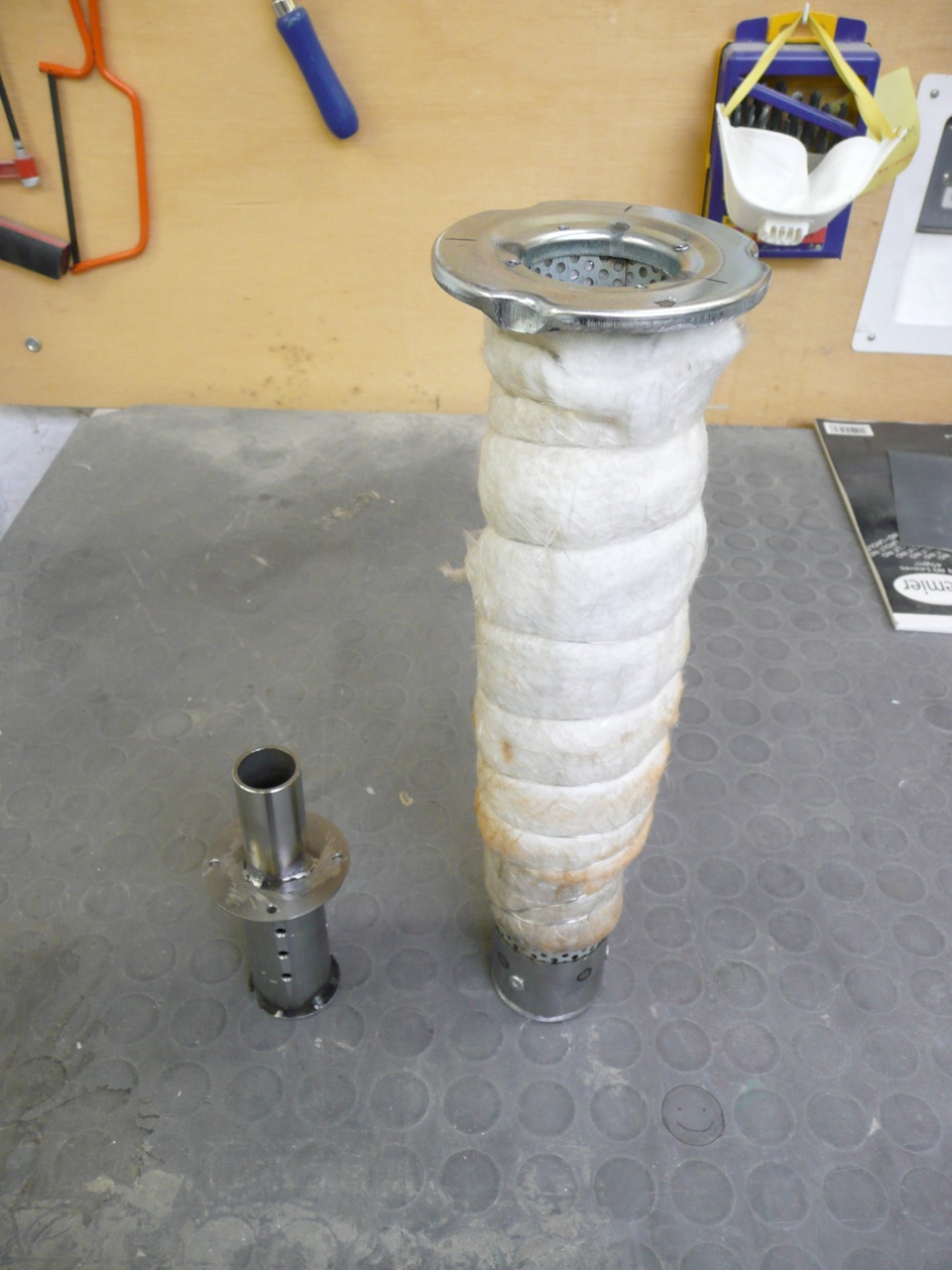
In the last installment of the bike build, which was let’s face it, too long ago and must be wrapped up soon, the exhaust was coming together. In order for me to be able to hear the results as the pipe came together a small tupperware container got a makeshift outlet fitted into its base and was then mounted to the main frame spar with a cable tie. With a bit of fuel onboard the engine could be started and run without the fuel tank in place and the exhaust listened to. The tank meanwhile was being prepped for painting.

The “silencer” that had been ordered came with an internal baffle already, if that’s what you could call it. You see these pipes everywhere on custom modified bikes so it will come as no surprise to anyone who’s ever had one that internally they are rudimentary to say the least. There was a piece of glass fibre packing inside the pipe but this was as good as useless. It would have disintegrated if you’d held it behind you and broken wind, frankly. So, first job was to get some proper packing material and firmly wrap the baffle so at least some of the noise could be absorbed. It was still too loud.

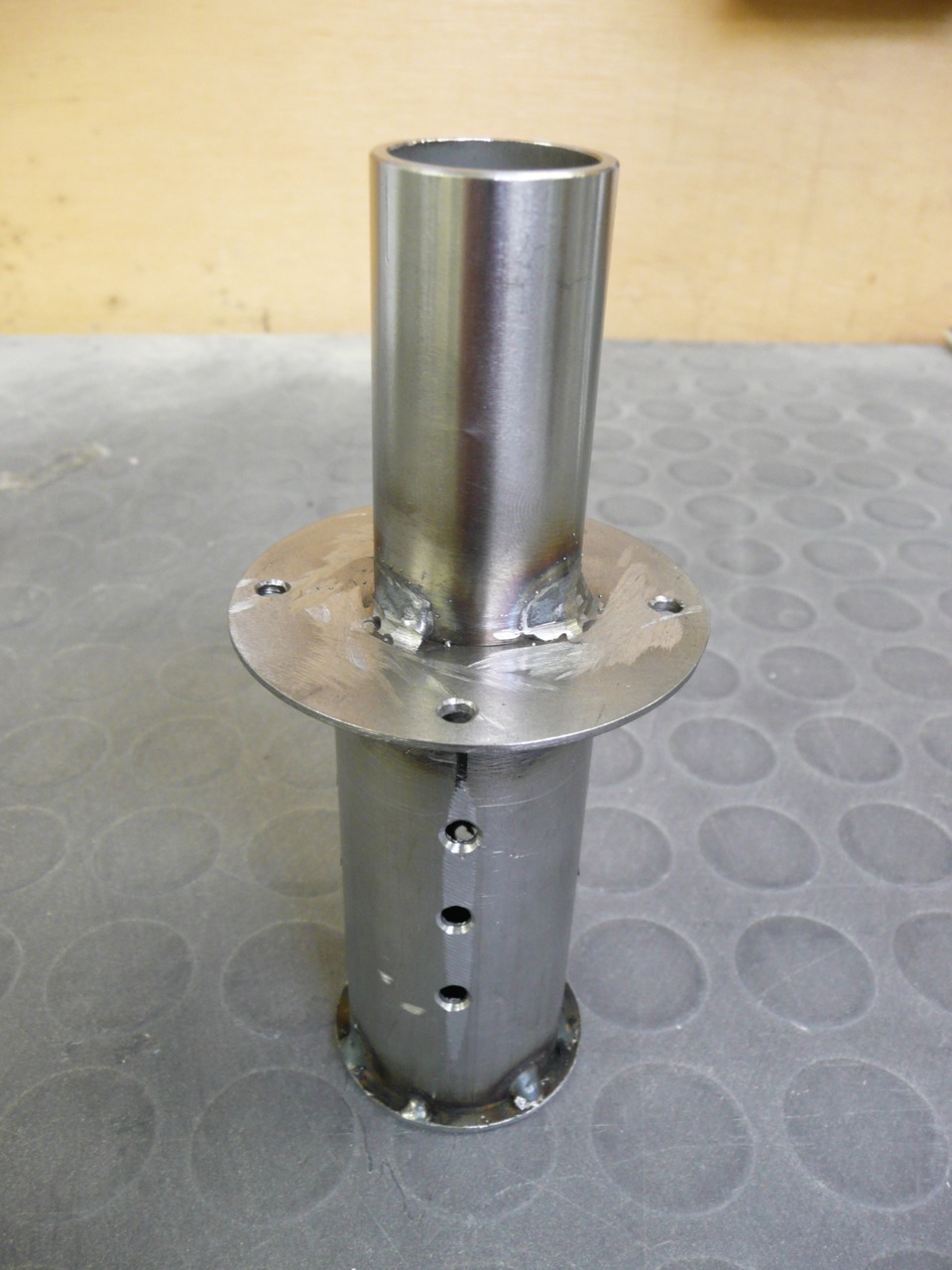
After a quick discussion about exhausts with the guys who’s workshop I was borrowing it was decided that the best thing to do was make a smaller secondary baffle that would fit into the end of the main pipe. Reckoning that the area of the holes in the internal cylinder should match that of the outlet it was time to have a go with the MIG welder. Not having used one much before, a quick session on the net provided some basic guidance to supplement the rather sketchy instructions contained in the user manual.

So a few hours later we had a finished baffle piece that fitted into the end of the main one that could be secured with three self tapping screws. Easy to remove and modify if need be and pretty much hidden behind the reverse cone end cap of the silencer. A couple of coats of aerosol heat resistant paint and the job was a good ‘un. This made a real difference to the sound and would be easy to remove if greater fruitiness from the pipe was wanted.This was the last fabrication job to do before the final build. What was up next was the biggest job of all, painting the bodywork.


Before moving on to that episode here are a couple of thoughts about MIG welding. Never having done any before, the thought of using the welder was a little daunting. Welding in all its forms has always come across as a bit of a black art, a deeply skillful craft practiced by wizards of metalwork with years and years of experience. This is all true but, it is also not as scary as it would seem. They say that every journey starts with the first step and so it is with MIG welding. Taking the plunge and having a go can lead you, with patience and concentration, to a thoroughly satisfying learning experience and hopefully a new found skill, and a finished part that you can be proud of.


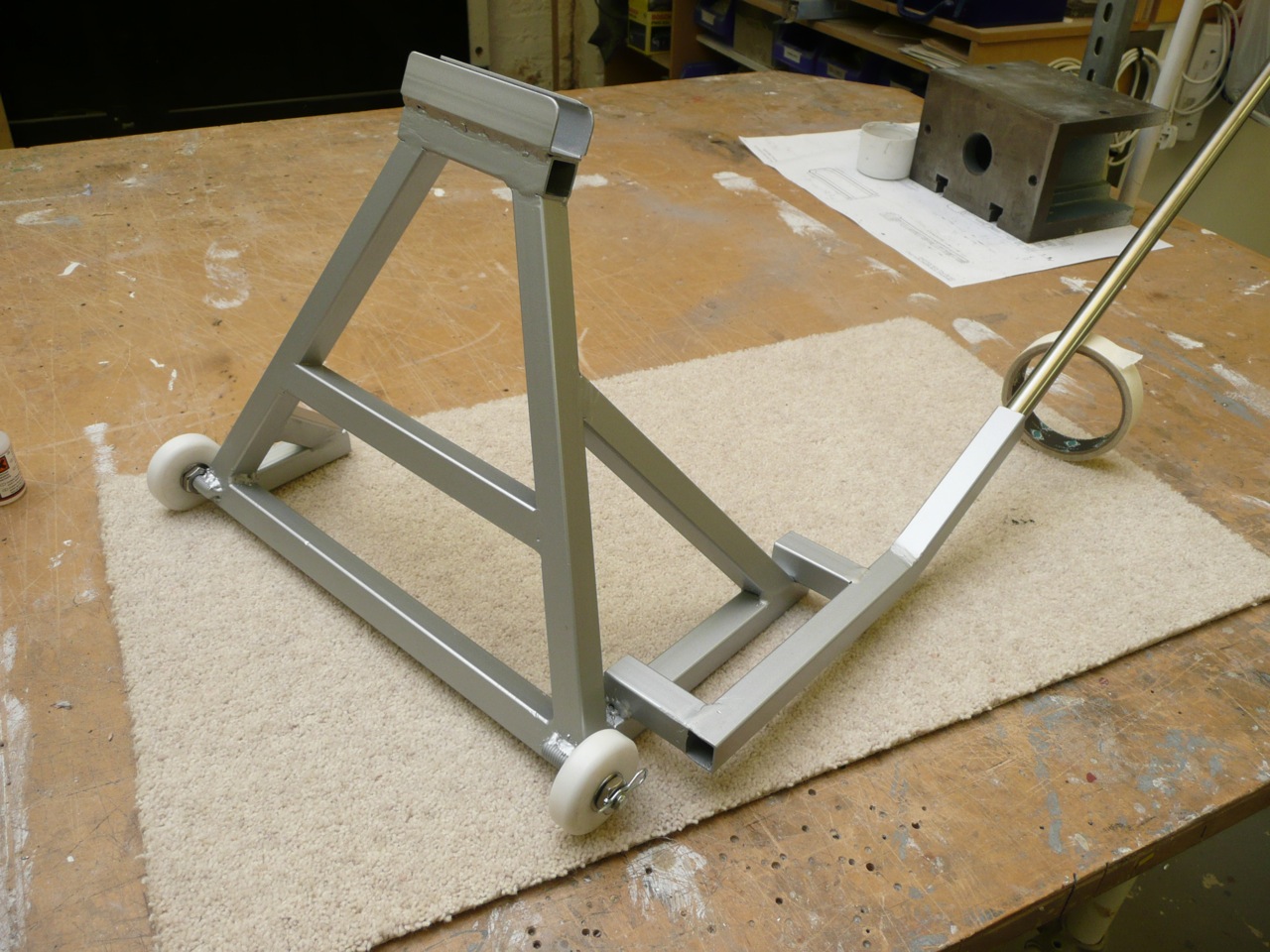
My own introduction to this skill took me from making a simple baffle on the first day to knocking up a small paddock stand for the bike, to use during routine maintenance as I’d seen fit to remove the centre stand as part of the weight loss program. All within a week.


As mentioned before the manual that came with the welder was a little thin and searching the internet for tips and tricks threw up some really useful information and some tips which I never would have considered in my inexperience. Here are a couple of links to the two most useful websites found. The first one was the best: Firstly Tips and tricks and the second one here. Sadly the need for welding anything in my everyday work is rare but it hasn’t stopped me from wanting to buy a welder and start making something.


Although my skills remain relatively basic I’m no longer reluctant to consider using a welder for smaller jobs. Welding bike frames is something best left to experts for now but, with a new skill in the back pocket, the options available when making more complex ancillary parts has now grown and that can only be a good thing for when the next project comes along.


The welder used was a small portable unit with up to 150W of power, switchable. It had a variable speed wire feed, a small remote gas bottle (Carbon Dioxide/Argon mix worked best) and nice hefty earthing clamp.


Support your local fender.

Contrasting profiles.

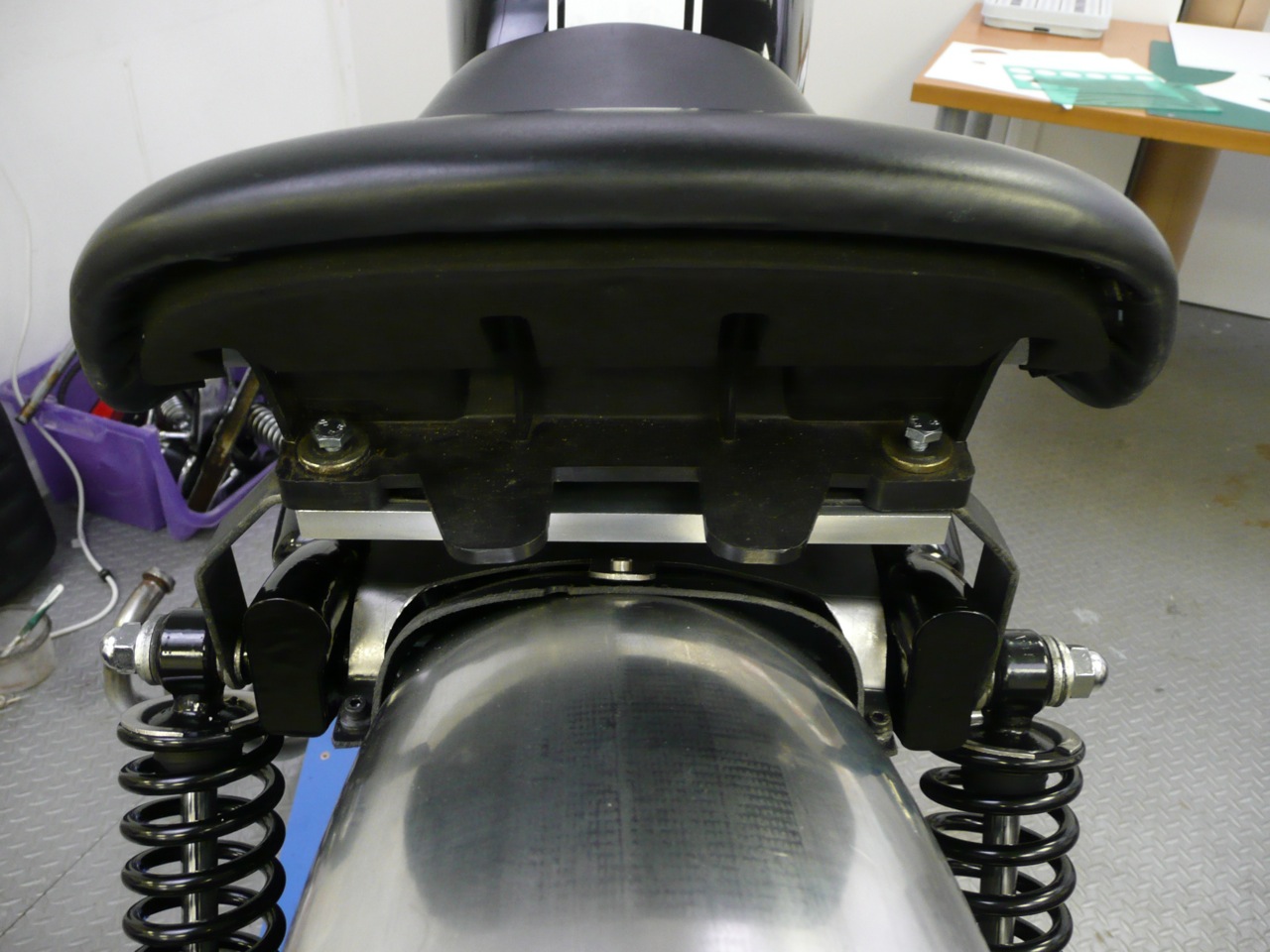
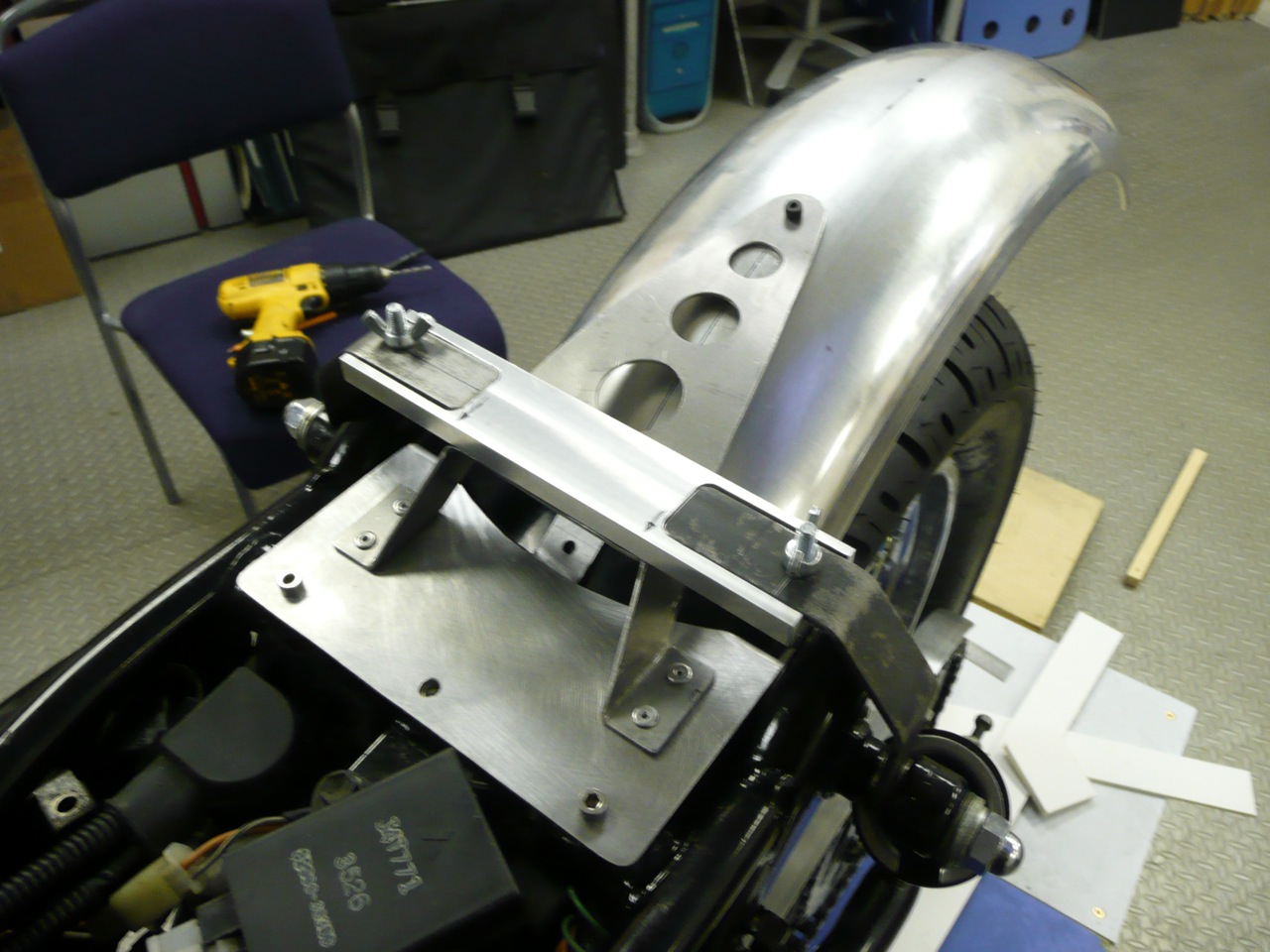
Following my slight diversion to talk about that stunning Moto Guzzi, here we are back again to get started on the metalwork that’s going to hold my rear fender in place. Revisiting my brief again and looking at where I’d got to so far I could see that I was looking to make at least two pieces that would hold the fender on the one hand and then help to tidy up the back end on the other. So the first thing was to turn the piece I’d sketched in my notebook into 3D and see where I stood. I had the mounting plate I’d put onto the frame rails as one fixing point and I had the cross piece formed by the seat support as another, so I reckoned my next bit would join these two and reach back to support the fender behind the seat mount. You’ll see also from the picture above that I had a mis-match between the curvature of my rolled section and that of the inner plastic guard which sat in front of the rear tyre. I’d need something to deal with that too but for now I wanted to get on with the fender support.

Crisp thin card, lovely stuff.

It’s an age old adage, and you’ll here it from many a craftsman/maker, that it’s always best to measure twice and cut once. This simple advice has saved my bacon on many an occasion. In situations such as this where I’m working without any kind of formal technical drawing of a part I bring a second safety net into play and that is to make pieces in card first, change and modify things until I’m happy and then carefully replicate what I end up with in metal or whatever material I happen to be working in. Again you’ll hear it from all quarters that knocking things up in card is a great way to avoid time consuming, and sometimes expensive mistakes. I’ll say a bit more about card in the following post.

Holes added for visual lightness.

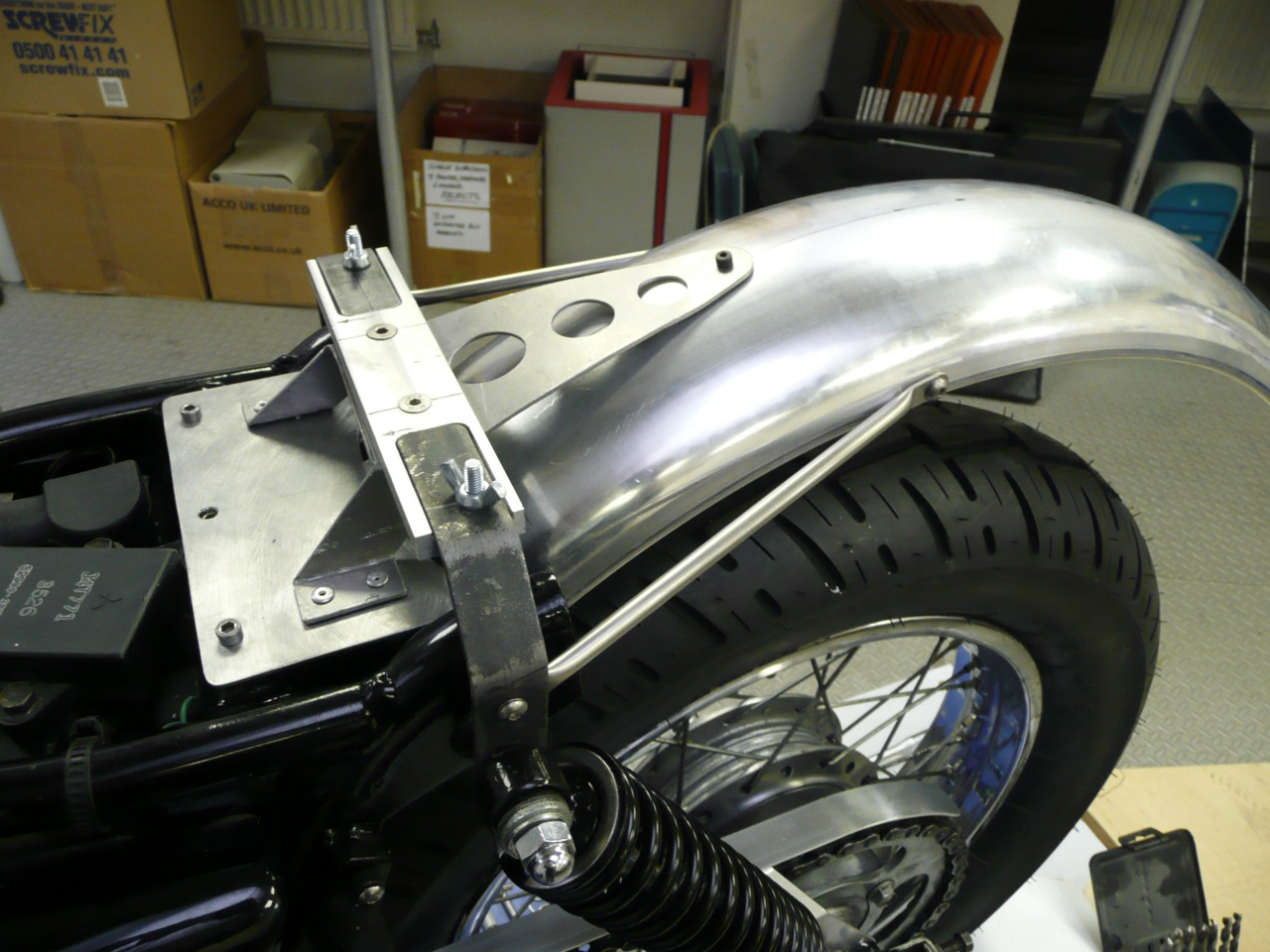
Happy that my card creation was what I wanted I marked out the resultant shape in flat form on my sheet of steel, making any final adjustments to dimensions  and hole positions. I did most of the metal cutting for this build with a jigsaw fitted with a fine toothed blade for metals. Working slowly and methodically it proved to be the best way to cut out flat parts that required the minimum of hand finishing by file. Cut out and finished, I bent the piece to shape in a large bench vice and positioned it to allow me to mark the hole centres for fixing it to my frame plate and the fender, which by this stage I’d shortened to close to the final length.

Tie bars in place.

I then riveted it in place on the plate and put a small bolt through the hole to secure it to the fender. This really went some way to eliminating the flexing I was worried about, particularly in the vertical plane but there was still quite a bit of movement in the horizontal. I decided that I needed to create some side supports and elected to put two thin tie bars between the seat support mounts and the sides of the fender part. I had some scraps of stainless tubing to hand and these worked perfectly after I’d flattened the ends of my lengths, drilled mounting holes, put a radius at each end and bolted them in place. Fixing things in this way, with nuts and bolts, meant that I would always be in a position to take it all apart should I ever need to mend, modify, replace or repaint anything in the future. At the same time I chose to make everything even more sturdy by drilling two more M6 bolt holes through the seat support cross member and the new fender support piece. At this point in the game everything was rock solid and I was more than happy.

Next up, finding a home for all the stuff that was going to be mounted on the fender itself.