

In the last installment of the bike build, which was let’s face it, too long ago and must be wrapped up soon, the exhaust was coming together. In order for me to be able to hear the results as the pipe came together a small tupperware container got a makeshift outlet fitted into its base and was then mounted to the main frame spar with a cable tie. With a bit of fuel onboard the engine could be started and run without the fuel tank in place and the exhaust listened to. The tank meanwhile was being prepped for painting.
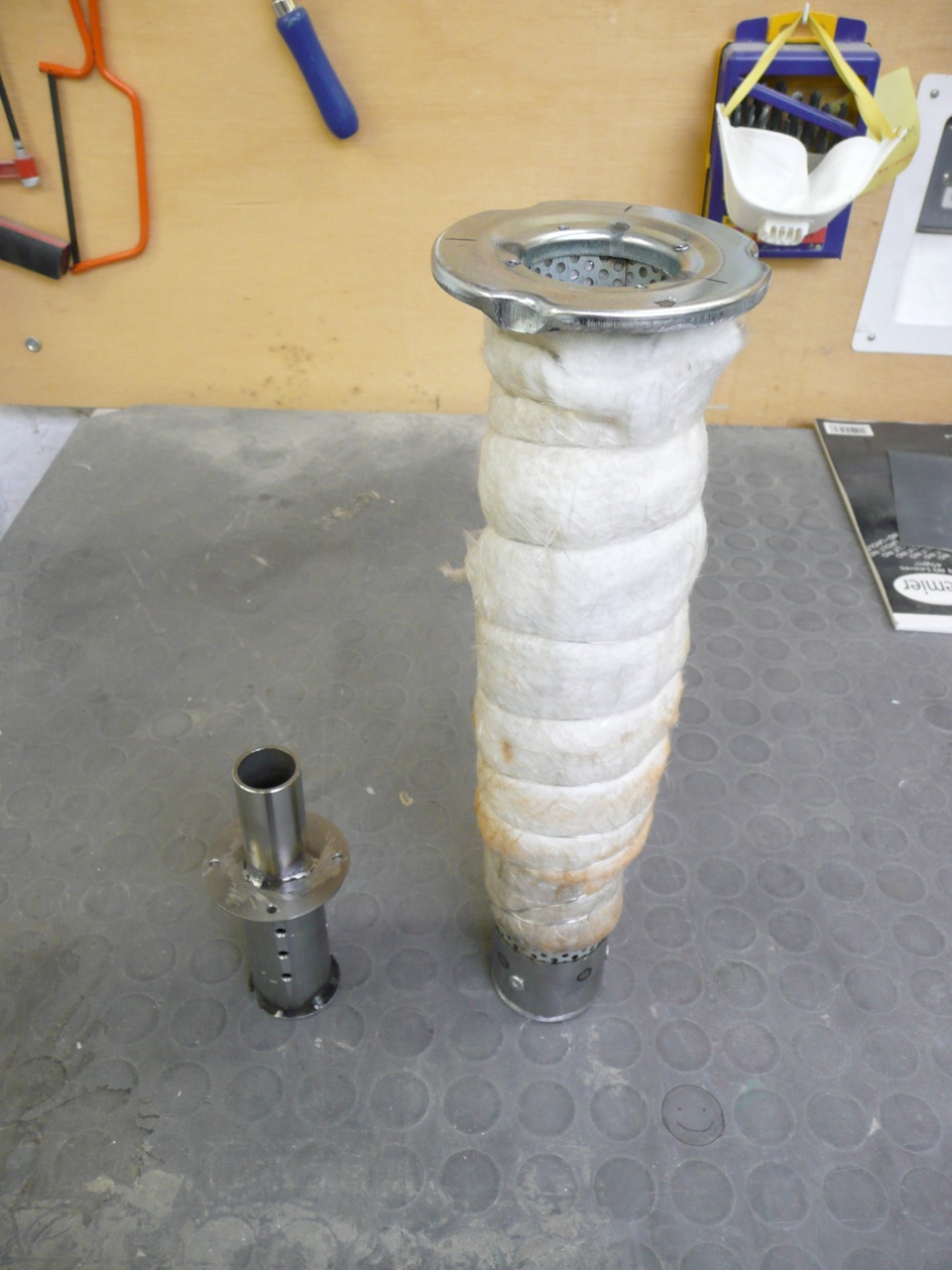
The “silencer” that had been ordered came with an internal baffle already, if that’s what you could call it. You see these pipes everywhere on custom modified bikes so it will come as no surprise to anyone who’s ever had one that internally they are rudimentary to say the least. There was a piece of glass fibre packing inside the pipe but this was as good as useless. It would have disintegrated if you’d held it behind you and broken wind, frankly. So, first job was to get some proper packing material and firmly wrap the baffle so at least some of the noise could be absorbed. It was still too loud.
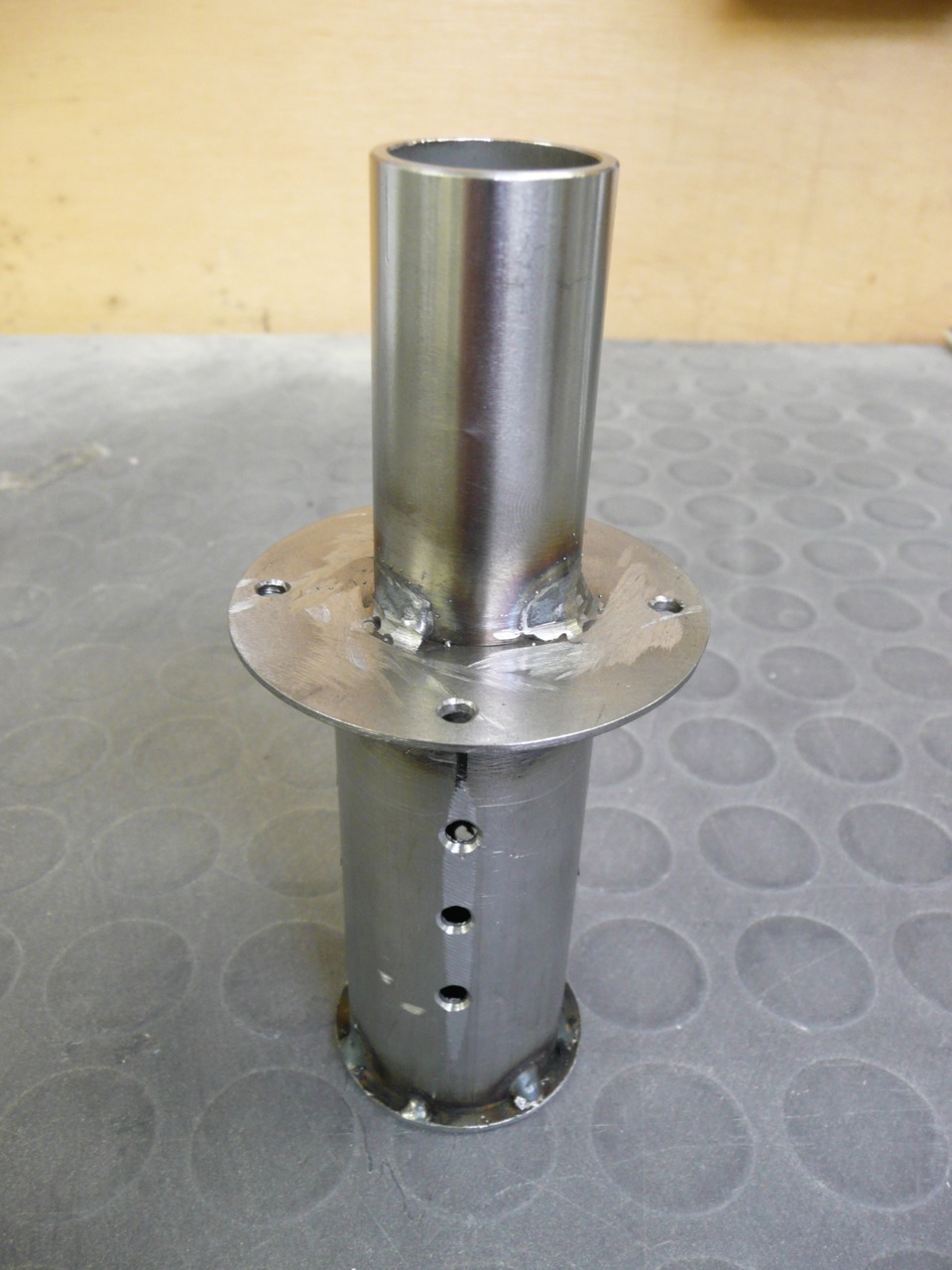 After a quick discussion about exhausts with the guys who’s workshop I was borrowing it was decided that the best thing to do was make a smaller secondary baffle that would fit into the end of the main pipe. Reckoning that the area of the holes in the internal cylinder should match that of the outlet it was time to have a go with the MIG welder. Not having used one much before, a quick session on the net provided some basic guidance to supplement the rather sketchy instructions contained in the user manual.
So a few hours later we had a finished baffle piece that fitted into the end of the main one that could be secured with three self tapping screws. Easy to remove and modify if need be and pretty much hidden behind the reverse cone end cap of the silencer. A couple of coats of aerosol heat resistant paint and the job was a good ‘un. This made a real difference to the sound and would be easy to remove if greater fruitiness from the pipe was wanted.This was the last fabrication job to do before the final build. What was up next was the biggest job of all, painting the bodywork.
Before moving on to that episode here are a couple of thoughts about MIG welding. Never having done any before, the thought of using the welder was a little daunting. Welding in all its forms has always come across as a bit of a black art, a deeply skillful craft practiced by wizards of metalwork with years and years of experience. This is all true but, it is also not as scary as it would seem. They say that every journey starts with the first step and so it is with MIG welding. Taking the plunge and having a go can lead you, with patience and concentration, to a thoroughly satisfying learning experience and hopefully a new found skill, and a finished part that you can be proud of.
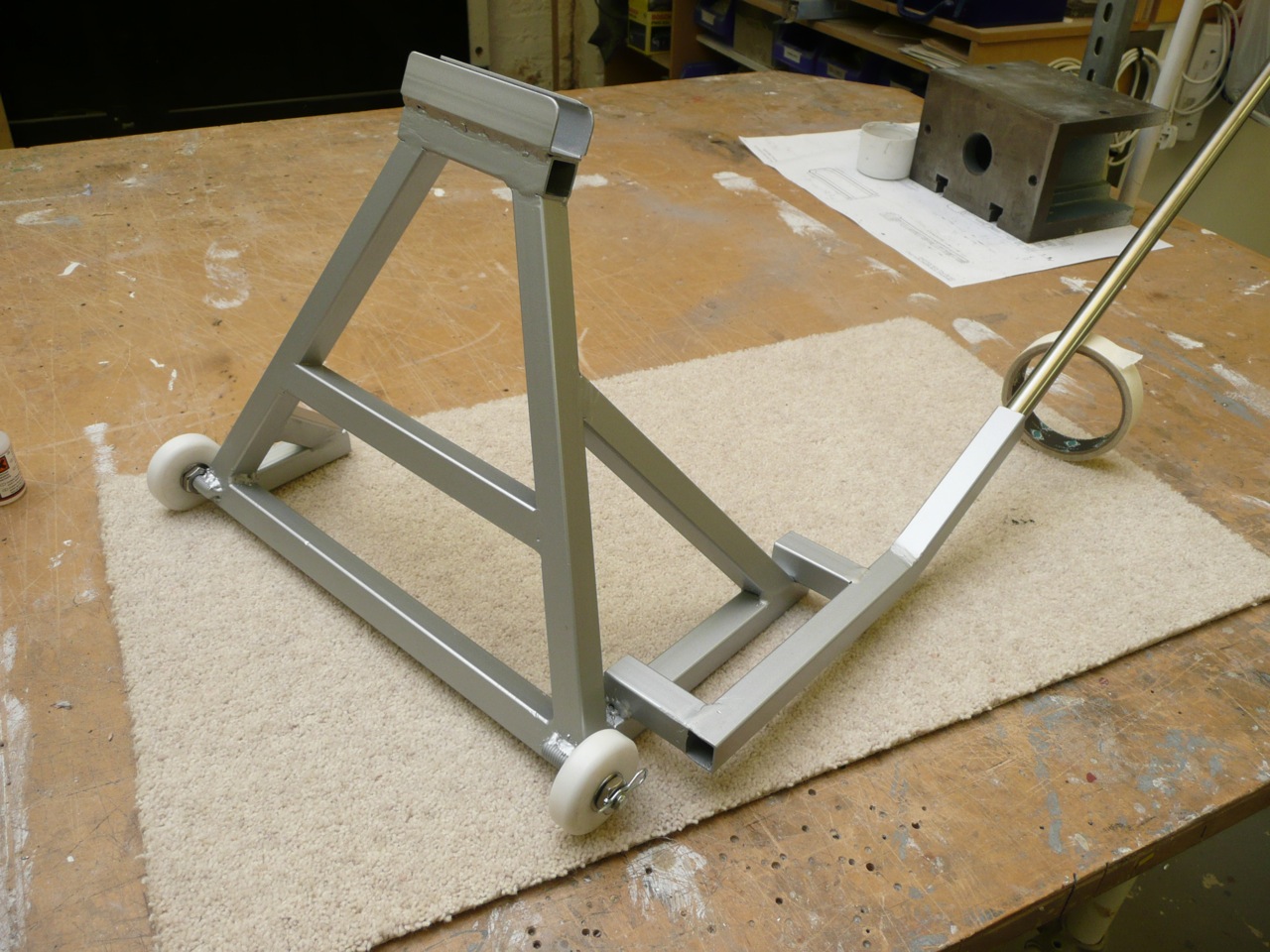
My own introduction to this skill took me from making a simple baffle on the first day to knocking up a small paddock stand for the bike, to use during routine maintenance as I’d seen fit to remove the centre stand as part of the weight loss program. All within a week.
As mentioned before the manual that came with the welder was a little thin and searching the internet for tips and tricks threw up some really useful information and some tips which I never would have considered in my inexperience. Here are a couple of links to the two most useful websites found. The first one was the best: Firstly Tips and tricks and the second one here. Sadly the need for welding anything in my everyday work is rare but it hasn’t stopped me from wanting to buy a welder and start making something.
Although my skills remain relatively basic I’m no longer reluctant to consider using a welder for smaller jobs. Welding bike frames is something best left to experts for now but, with a new skill in the back pocket, the options available when making more complex ancillary parts has now grown and that can only be a good thing for when the next project comes along.
The welder used was a small portable unit with up to 150W of power, switchable. It had a variable speed wire feed, a small remote gas bottle (Carbon Dioxide/Argon mix worked best) and nice hefty earthing clamp.



 Soulcraftcandy