Fresh eyes are often not your own.

This drawing is one that’s been hovering around unfinished for a while, but is now done. I hope you like it. I’ve always been intrigued by funny front ends. I’m in no position to ever build a bike with such a concoction of engineering complexity, but I get some satisfaction from drawing these things. There are lots of sketches in the pile but this one made the cut last time around. The lines in the background come as a result of the following tale.


A good friend mine met me for a casual late sunday pint over the weekend and made a couple of interesting observations about the last drawing post. He was very complimentary about the image itself but what he said after that was the bit that mattered. He began by making comments about some of the much earlier drawings that had been on the blog earlier in the year. He liked them too but felt that they were somewhat isolated and hovering in a space not tied to anything. We agreed that it was the lack of background which created this feeling. What was really interesting was what we discussed next. Asked if I would ever start doing drawings of real bikes like BSA’s and Triumphs I said that I wouldn’t. The reason I gave was that it didn’t interest me, creating images of what already existed. There were already plenty of those in the world I suggested, and besides I didn’t feel like getting bogged down in worrying if I’d got all those niggley little details correct, stuff like that. He did not disagree with this approach but said that by including even a very simple horizon line in the newer drawings, what it achieved was to bring the drawing into the real world. This creation of a reference to reality somehow made the drawing more believable, placing it in a context that could be related to and giving a dimension, a depth if you like, that had previously been missing. I liked his thinking and was impressed with his perception.


You may remember that some time ago I spent quite some time talking about what to do in terms of backgrounds for some of the images. I’d messed about with a whole stack of print outs but never settled on a final approach or approaches. This conversation with my friend, although short, provided all the validation that I had not been able to find within myself for the direction that these things should take. Fantastic.


This is not only a great relief, but also a great way to follow on from my previous post about learning to judge your own work and be critical about it. I realised that I had completely failed to fully analyse this aspect of the images and come up with a strategy for what to do about it moving forward. I must at this point also thank Cecilia, one of my subscribers, for alerting me to the fact that one very good and simple way of engaging with the process of being critical about ones output is to go and do something completely different for a while. To engage in something totally unrelated to what you’ve been focussing on. This clears the mind and freshens the eyes in a way few other things can. Fresh eyes bring a new perspective. In the above case my friend Richards eyes were the fresh perspective. Thanks mate.


Adopting this idea on the latest drawings is really working, what will be interesting is where it goes next.

This is how far I’ve got with the work up of the sketch I showed last time out. It’s going into ink now so watch this space.


Let’s be critical.

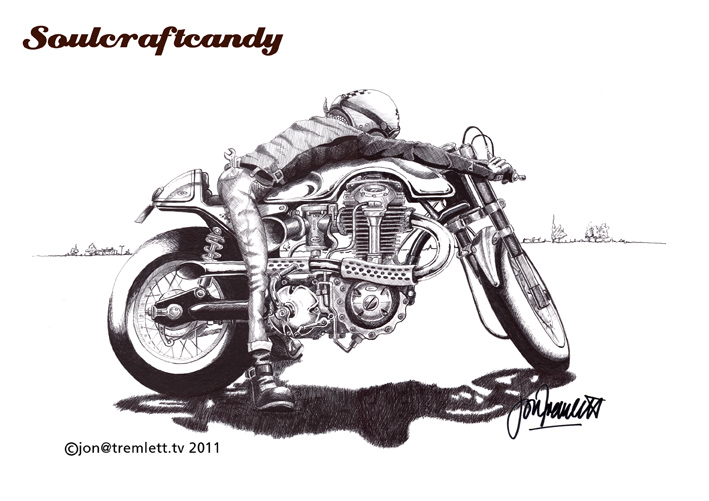
A couple of posts ago I showed a photograph of the above drawing about one third done. Well, here it is finished and I’m very happy with it. Every now and then you complete a drawing which just seems to eclipse some of the others, it has something about it which keeps your attention for a little bit longer and speaks to you in a louder voice (I know this sounds pretentious but bear with me). Even though it’s in black and white it has that “pop” that I talked about before. But these are not the only reasons I feel good about finishing it and looking at it.


For me it demonstrates a progression in my technique which is most gratifying. These things take many hours to complete in ink and the potential to lose ones way in the rendering looms large in the background. Here’s how I think it shows things moving forward.


Firstly, and most basically I’ve got the position on the page nailed. My shading technique is much better on this one and is much more confident. I say this because of two things. One is that working on the principal of less is more, I’ve managed to get a much better tonal range across the picture through creating better contrasts between the light and dark areas, which adds to the “pop”. Some of my drawings in the past have suffered from being a bit too grey. The other reason is that I’m starting to get to grips with how to deal with the shaded detail on the figure. By worrying less about all the little wrinkles and folds in clothing and leather, and so keeping these surfaces simpler somehow adds to the impression rather than detracting from it.


The inclusion of a simple horizon line in the background and a fairly simple approach to the shadow in the foreground give the main core of the image enough of a context to confidently occupy the centre of the page without taking away anything from it.


One of the hardest things to learn when engaging in self-initiated creative work is the ability to analyse ones own output, be critical of your own work and approach and, to subsequently work out what it is that you should do to improve and keep moving forward. The judging of creative output is a terribly subjective activity whether conducted by a single person or a group. The key is learning how to regard things objectively. Some people are naturally good at it, others need to learn. I started life very much in the latter group and as a result feel that I’m often still learning even after all this time.


My learning this critical skill started at art college and continued through all my years working professionally. It opened my eyes to the need to investigate options, to iterate, try different approaches and to realise that your first idea is never the right one or the final one. To many designers this sounds like teaching your granny to suck eggs but, it was amazing how much time I would spend with my students when I was teaching, explaining that without understanding ones own work in a critical fashion you had very little chance of explaining it to anyone else. It also meant that by the time one got to present ideas to a client, the ideas were of a higher quality and so stood more of a chance of being accepted. I’m sure there’s much more to say on this matter, but I’ll leave that to another time.

Before I go here’s another sneak peek. This is another big singled bike I’ve just started working on, a kind of sprinter. It’s sharing my time with some others on the drawing board so we’ll see which one gets to be finished first soon.


Lights fantastic.

Been so busy with all of the drawing stuff that I’d clean forgotten to get back up to speed with the story of the 250 build, sorry. Actually it’s about time I started getting to the end of this otherwise it’s going to turn into the longest quick build in history.

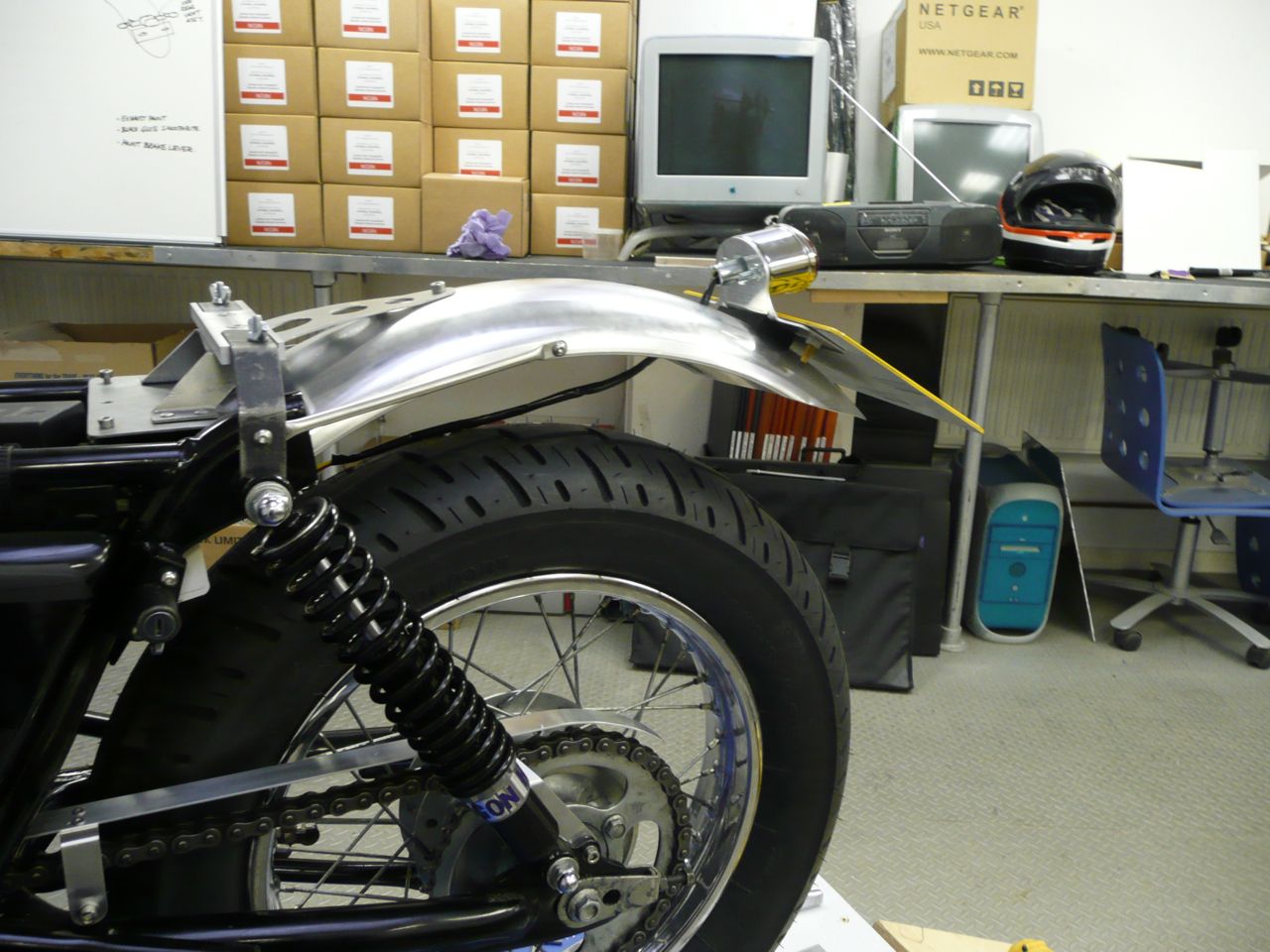
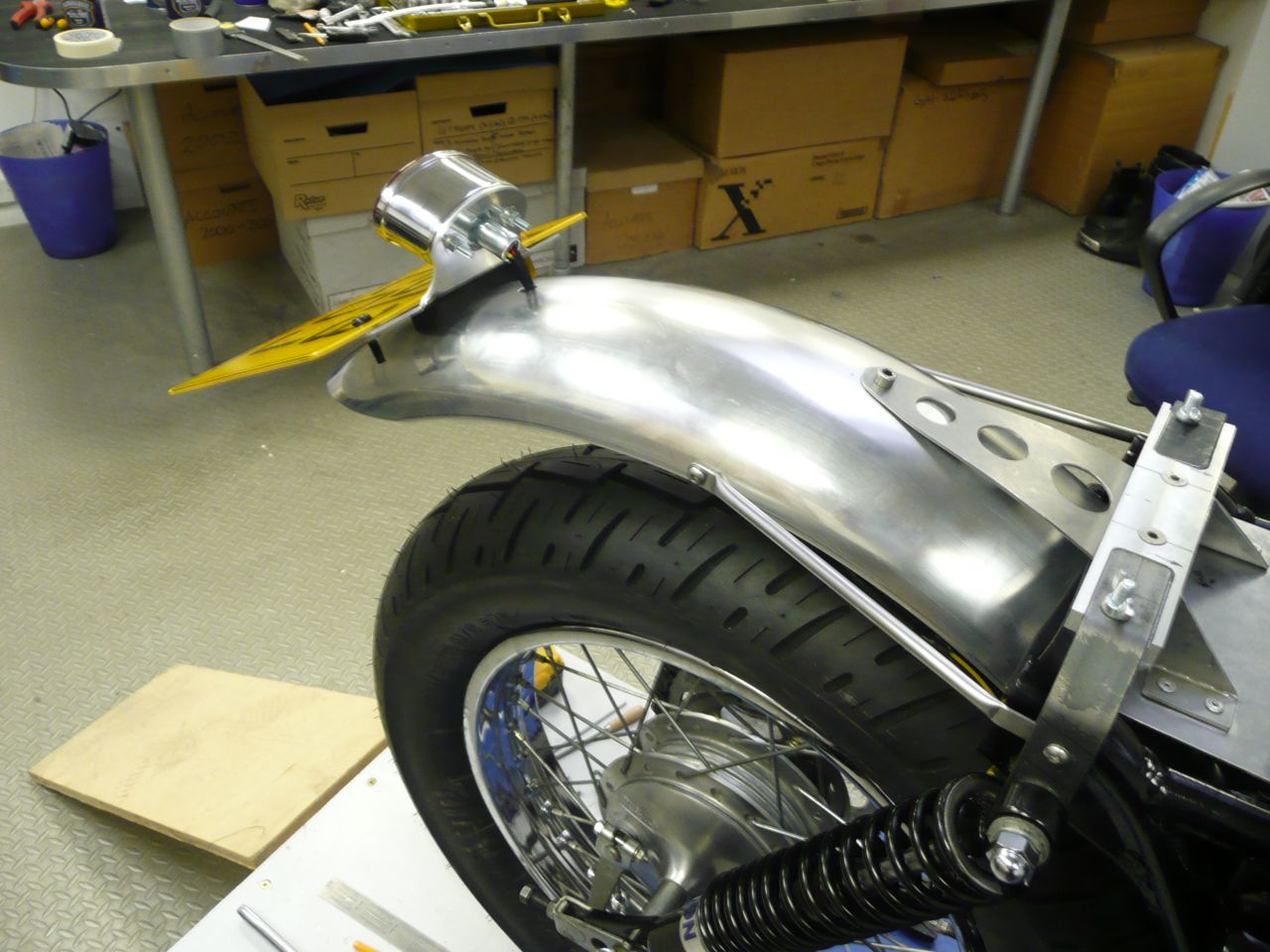
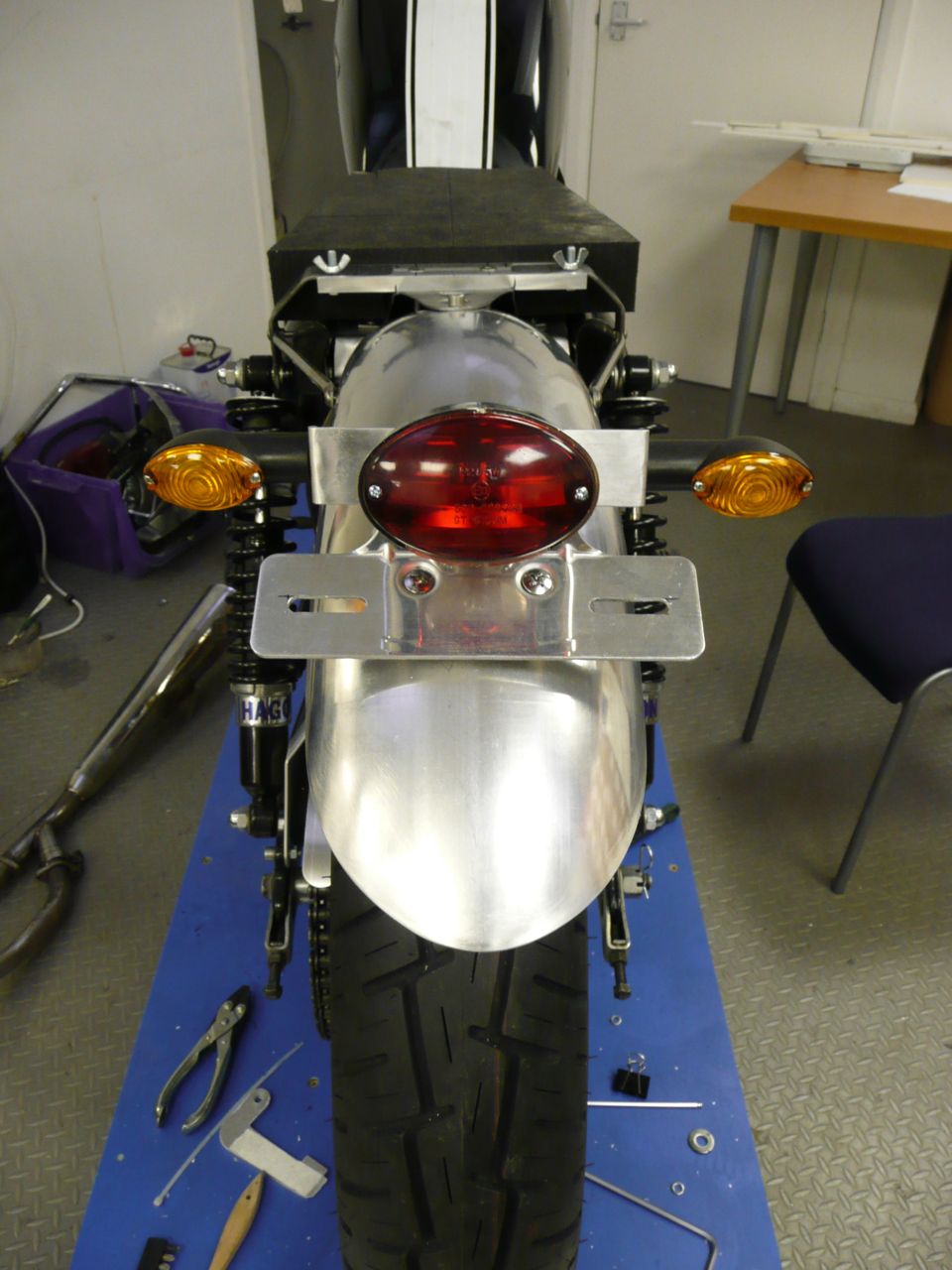
So where were we? With the metalwork completed for holding the rear fender and the rear of the seat in place it was time to cut it down to its final length. and attach the rear lamps. I’d decided on a rounded end to the fender and made up a thin card shape template using a combination of large radii. The line was drawn on the fender with a Sharpie and then cut round carefully using a jigsaw, much noise and dangerous looking manoeuvres. I finished it off carefully with a metal file and some wet and dry paper wrapped around a block for a smooth finish ready for painting.

I’d made up the rear lamp assembly in accordance with my build philosophy, this was to be a workhorse bike. So I wanted easy removal of the whole lot if needed, tidy wiring and if the registration plate was integral all the better. I knew I couldn’t have the plate mounted on the side of the bike to keep the back end clean as this would have been asking for trouble in the parking bays of London, so on the rear fender it had to go. I’d cut and bent a short length of flat aluminium, drilled appropriate holes and created an assembly which could be mounted and removed as one piece.

When attaching the light assembly I didn’t want to distort the aluminium of the fender by bolting the flat mounting directly to the top of it. So I needed to make a block of something to cope with the curvature of the top surface. I tried a whole host of solutions from solid plastic blocks to bits of bent metal strip but nothing worked well enough. Time for a think. In the end I settled on cutting and shaping a large lump of quite firm neoprene foam to sandwich between the lamp cluster and the fender. I figured it would compress into the correct shape, which it did admirably, and that it would provide a degree of vibration damping for the lamp bulbs. Whether it would or not I’ve never really proved but it looked good enough for my purposes so I went with it.

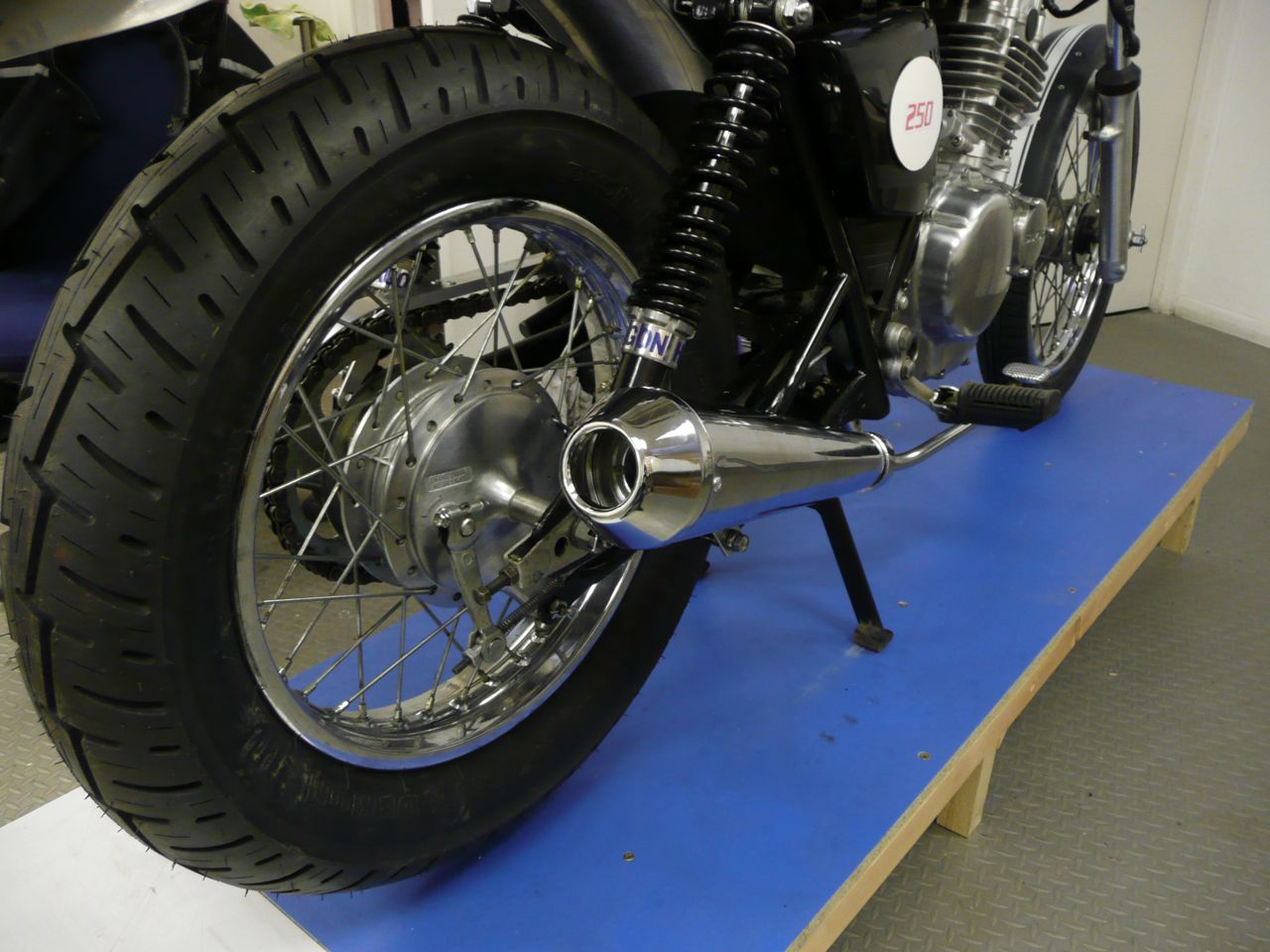
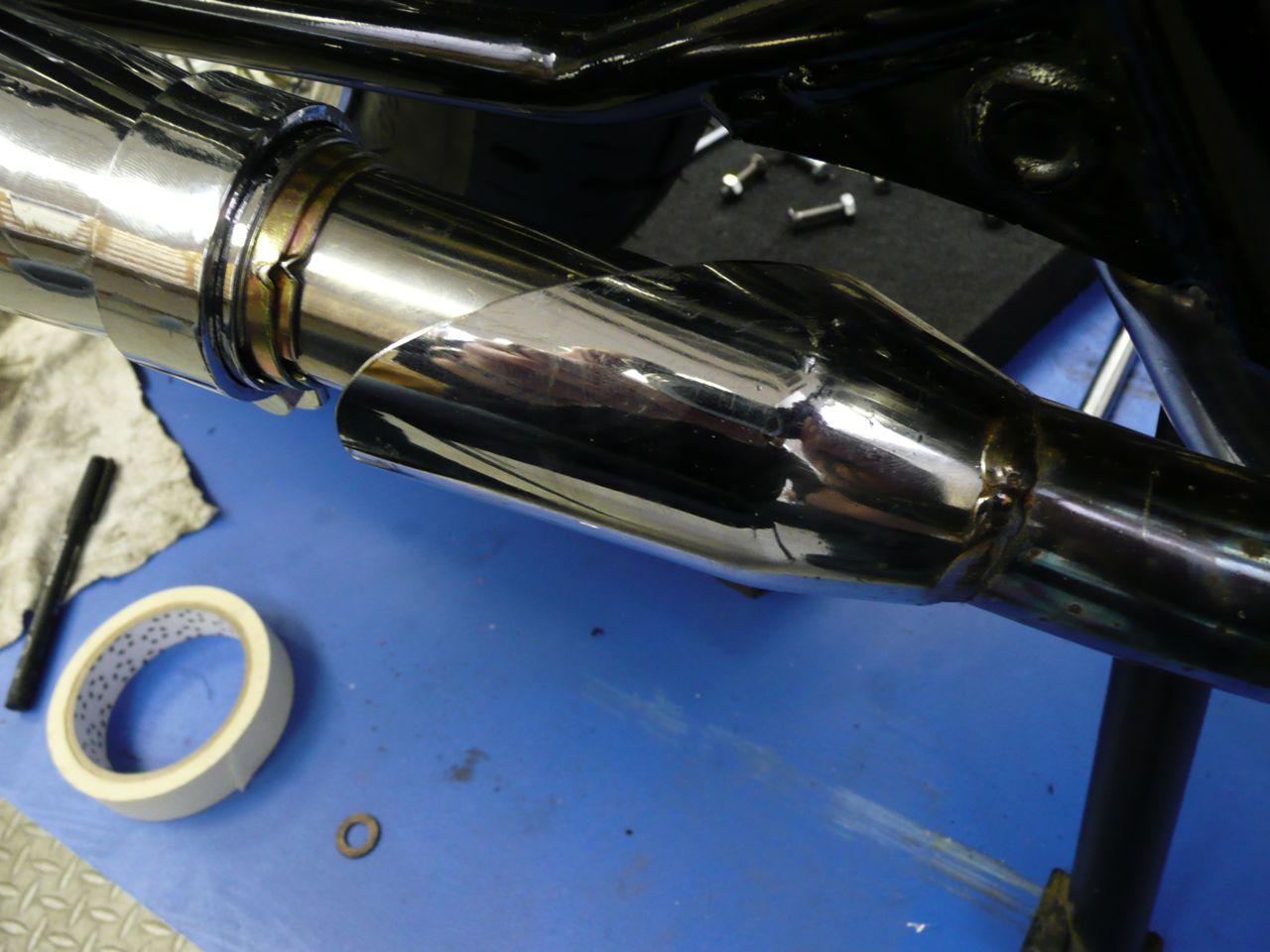
I’d also received by now the exhaust muffler I’d ordered and bolted this to the back of the bike to start the process of working out how to attach it to the engine. I’d decided, for budgetary reasons primarily, but also because of time to use the existing header pipes and junction but, I had no idea where to make the cut to remove the enormous and heavy standard muffler. Reckoning that the pipe would pass into the muffler for a short length I reached for the angle grinder and cut through the muffler at its root. Low and behold there was a length of exhaust passing right up into the offending muffler. I measured the diameter and was happy that I could attach the new muffler to it and tidied up the cut by taking a slice at an angle creating a kind of heat shield detail.

So the pipe went on very quickly much to my relief. But it was loud, so I knew i’d have to do some baffling if it was to stand any chance of getting through the MOT test.