A good pen is an expensive tool, look after it.

The finished workshop polo shirt.

The finished workshop polo shirt.

So here is the shirt design for Bill Bunn Motorcycles, my local bike shop, in its finished form. The guys very kindly gave me a polo shirt in way of payment, which makes one feel very good about the idea of bartering. The quality of the screen printing is really good and the level of line and detail they have managed to keep is very high. A great result.

This black and white block reductive drawing is becoming strangely addictive. Partly I think it has to do with the process being quite quick, you see results quite fast but, it also has much to do with the simple pleasure of pen use and the decision making process. Areas of the drawing are either black or white and that’s it, this way or that, simple. As more drawings take shape it becomes easier to decide which way to go, ones ability to “see” what gets left out becomes clearer. It is amazing how the eye and brain are able to build a complete image from only a rather basic framework of information.

Big_Ink_CB750©JonTremlett2015

This activity is also helping me to complete some drawings which have been lying dormant in the drawing chest because I couldn’t decide on how to finish them. This indecision invariably comes from a lack of confidence and a worry about messing something up having invested a great deal of time and effort into it. For some reason this temerity seems to disappear once I start thinking of completing them in this style. One example is the drawing above. It must have sat in the drawer for about a year while I dithered over the final execution. However, armed with a couple of freshly filled Rotring pens it all came together rather quickly. there is still some background to complete to bring it on a bit further but essentially a neglected work has taken on new life.

Techy pens1

One aspect of working in this way is that I’ve realised that I actually have a rather unhealthy pen fetish! I’m actually a bit of a technical pen nerd in reality. It is a necessary part of using these things that one has to be rather fastidious about their cleanliness in order to get the best out of them, and I find myself enjoying this often messy job. There’s something terribly satisfying about making the first lines after a thorough clean and refill of my most oft used pen. What strikes me as a bit excessive is why I have to have so many of the things? At least a dozen at the last count, though not all are in working order. Long neglected at the bottom of a drawer, one or two are utterly dried up and solid with ink residue, a rock hard shellac like substance that seems to be impervious to most solvents. Prolonged soaking in cleaning fluid, often weeks, helps to release things but often the smaller sized nibs are beyond help. I have no idea why I have so many, like many bits of drawing equipment we just seem to accumulate them unwittingly over time. I remember purchasing my original Rotring box set over 30 years ago, second hand from a market stall but where the others have come from is anyones guess. Likely bought because I’d forgotten I had that size already or they were so bunged up I just went and got a new one rather than bother cleaning them out. Profligate and lazy days to be sure. One thing being a freelancer teaches you though, is looking after your stuff so hopefully m nibs can look forward to a more pampered and productive life from here on.

Support your local bike shop.

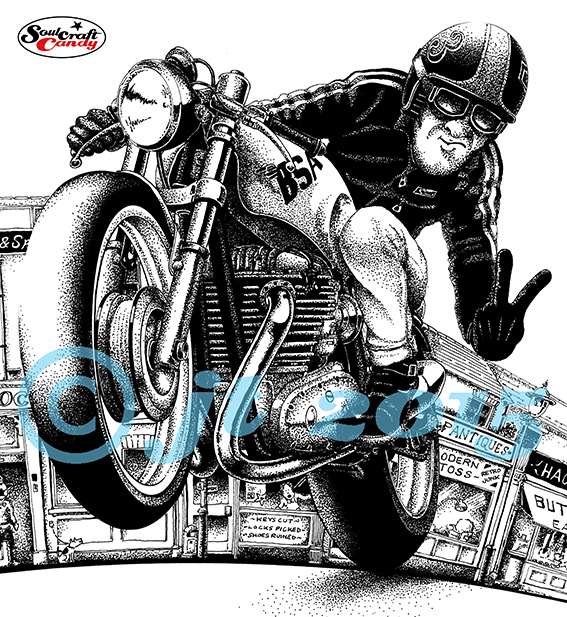
The finished design at it will look on the shirt back.

The finished design at it will look on the shirt back.

It is an old english adage that the centre of any small community is the local pub, a hub around which much of the activities of the local people revolves. This is invariably true and in larger communities it is also true that local shops and tradespeople make a huge contribution to the life and vibrancy of a place. Now more than ever it falls upon us, particularly here in the Uk, to support these small local businesses as more and more areas fall victim to the scourge of the megastore. I’m trying to do my bit, buying bread from the baker, meat from the butcher and sundries from the local hardware store. Being an avid motorcyclist I’m also making myself a regular customer down at my local bike shop.

Bill Bunn Motorcycles, a small family business, has been in existence for about 50 years and is the epitome of what your local bike shop should be; compact, friendly and happy to handle everything from an engine rebuild to changing your oil. The guys there are always helpful, good humoured and armed with years of hard won wisdom and experience to help you keep your machine(s) on the road. They are a top team and deserve to stay in business for many years to come. Fortuitously, for me at least, it turns out that they are fans of my work, having found it via the blog last year sometime. A resulting chat, enjoyed whilst dropping the little Suzuki off for a new tyre fitting, revealed that they’re refreshing the store this year, sprucing it up a bit with fresh paint and a general sort out. So, along with some lovely old photographs they have, the guys wanted to hang some prints of my cartoons on the walls too. One should never pass up this kind of opportunity and I’ve supplied some framed prints to them with some prices if anyone might want to purchase one. They also asked about perhaps doing a design for a t-shirt based on one of the drawings so that they could get some shop shirts printed up. I said yes.

How to turn this into a vector artwork?

How to turn this into a vector artwork?

The title image to this post is the final design for the first shirt, we’re thinking of doing more if these prove popular, and will be printed on white on the back of the shirts with a shop logo on the front. I’ve never really spent much energy before working up stuff for a t-shirt print, though I have been thinking about it a lot recently, so this was a great chance to work out how to do it.

Although there are now lots of options open to anyone wanting to have some shirts printed, from simple transfers to laser cut vinyls, the one technique that still stands above the others in terms of crispness and quality is screen printing, and for that most of the printers require vector file artwork. So I needed to get from highly detailed dot shaded hand drawing to vector line art and I had no clear idea how. I knew that all the relevant software needed was sitting in front of me, I just hadn’t used it in this way before. Time to learn some new tricks and jump into the web for tips, advice and a whole host of helpful tutorials on Youtube.

Starting with a high resolution scan of the source image in Photoshop and converting it to a bitmap image, it was relatively simple to cut it out from the background and start tidying it up. What caught me by surprise was how long it would take to remove all of the dot shaded areas and then touch up the picture with erasers and brushes so that line thicknesses and detail areas were not so fine as to get lost in the subsequent tracing process in Illustrator. I admit that I had to go back and forth between the programs several times before things started to look right. Eventually I got it how I wanted it and dropped it into a layout for the final design.

Vectorised and ready.

Vectorised and ready.

The second thing that took me by surprise was the reversal process to create the artwork. Screen printing requires that the artwork, what’s to be printed, is presented in black on a white background. With this shirt the print will be white ink on a black shirt, so the artwork for the drawing needs to be reversed so that it’s the white bits that get printed and not the black bits. I hope this makes sense. The tricky bit here was making sure that when reversed the highlight areas in the normal image weren’t so small as to disappear during printing. This reversal had to be done in Photoshop before the tracing process took place but, it worked out pretty well.

The shirts are now ordered and I’m looking forward to getting my hands on one, it will be he first properly printed t-shirt I’ve ever designed, and that it in itself a really big step for me. As a result I’ve been pushing on with a couple of my own designs and I’m hoping to get those to print before too long. If they’re any good I’ll put some up in the blog shop. Watch this space.

Before I go, a quick apology for the blue copyright stuff across the images today. Like many I suffer from image appropriation and this is a small gesture to try and eliminate a bit of it.

When you get buried, it takes time to dig yourself out.

Can you guess what it is yet?

Can you guess what it is yet?

It’s funny how certain changes in activity totally change your perception of time and its passing. I’m sure that part of my brain looks back at the previous post and tells me that it was only posted yesterday. The reality is of course, very different, and I awoke this morning with a terribly guilty feeling about the blog and how I’ve ignored it for absolutely ages. This won’t do, I thought, and resolved to post today come hell or high water.

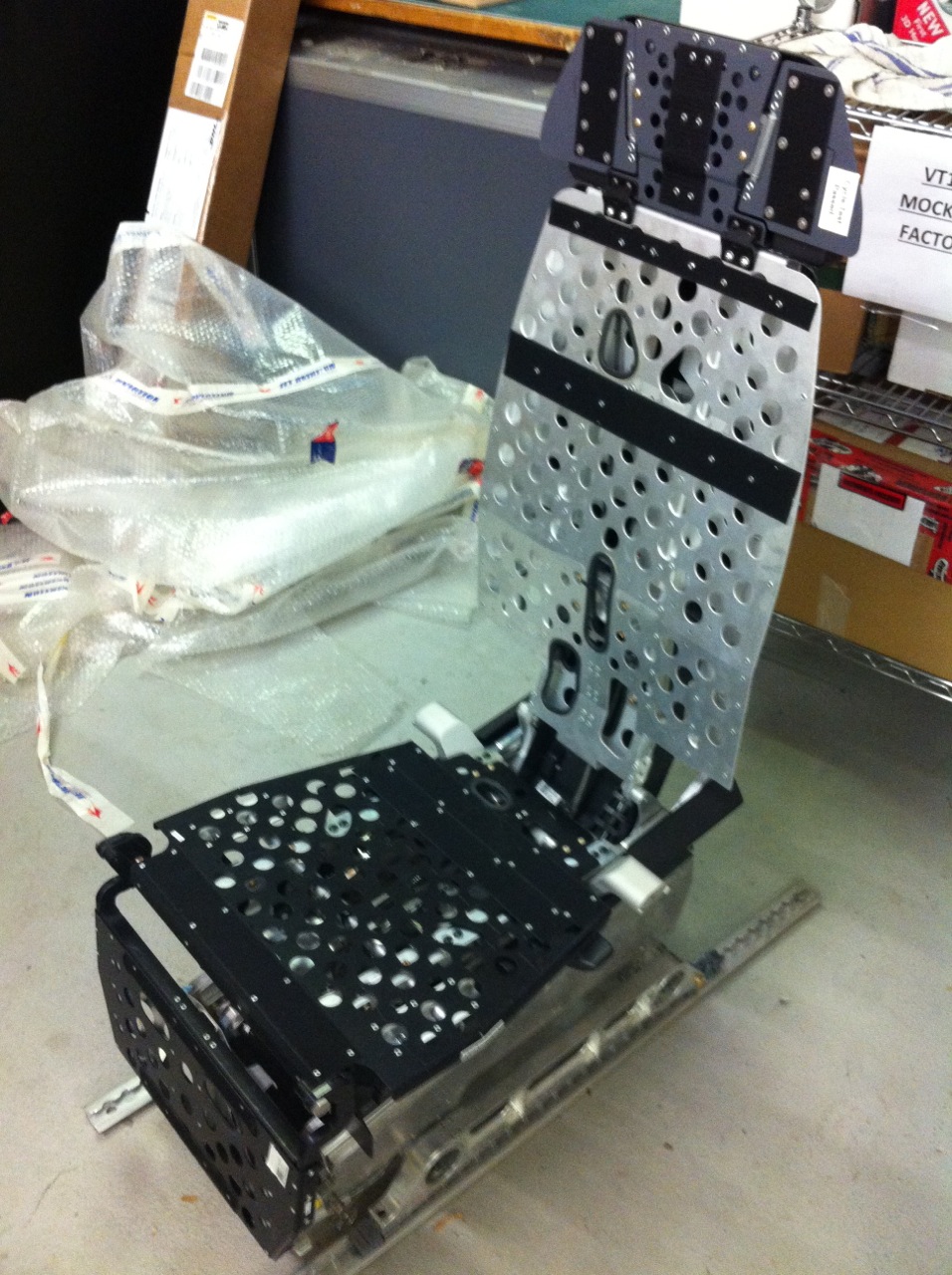
My absence has been mainly due to a heavy freelance workload that started back in January. Regular readers may remember me including details of some of my freelance work back in October last year, follow this link to that post. I was talking about making big aircraft seat mock ups out of poly-board. Well, the next stage of these things involves taking the mock up to the next level, which includes all design, engineering and detail changes as the design progresses. These next level mock ups are invariably made out of MDF (wooden fibre board), are quite complicated, require a higher level of finishing and weigh a ton. This is what I’ve been doing and in this case they have required the insertion of a fully working seat mechanism into the furniture. As usual I can’t reveal any details in picture form as those of us who do work in this area are invariably tied by rather scary non-disclosure agreements. Due to the competitiveness of the industry and the amounts of money involved, confidentiality is paramount. I can however show you a picture of the seat mechanism as this is already a commercially available item. Lovely isn’t it.

Seatmech1

Both of the mock ups I’ve been making required a lot of finishing in paint with various upholstered parts, so took quite a few weeks to complete working flat out. By the end of it I was exhausted both physically and creatively and I found it virtually impossible to get back to quiet drawing practise. So instead I built a new toilet under the stairs on the ground floor of my house. And now that’s done it’s time to start thinking about those little personal projects that keep the creative muscle working and drive my posts.

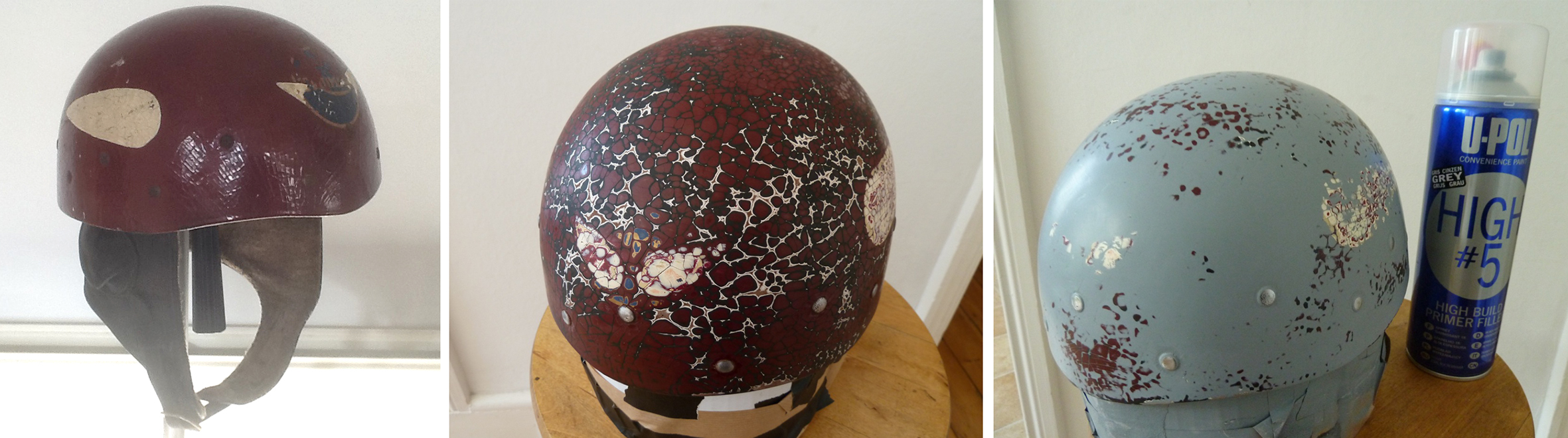
helmet1

So what’s on the drawing board? Well, a number of things actually. Here is the first one. A couple of years ago I bought a two very old and battered crash helmets at a junk sale. They were made in the 50’s by a company called Centurion in Norfolk, England. What’s surprising about them is that they’re made from paper pulp and resin, so not that protective when you think about it. Needless to say they are pretty worthless these days but, I think they are nice objects in themselves and deserve a home. For ages I’ve been thinking about getting some of my images off paper and onto some other medium, so I’m going to paint the helmets with some cartoons. To spur myself on I went and purchased some sign writers paints and started preparing the first helmet for painting. It required much rubbing down and liberal use of high build primer spray to create anything like an even surface to work on. It’s in white primer now and so nearly ready for applying the final design. I’m currently working up some sketch ideas for this and I’ll reveal some of that work in the next post, which I promise, will be very soon.